
United Sound Systems
Our Take
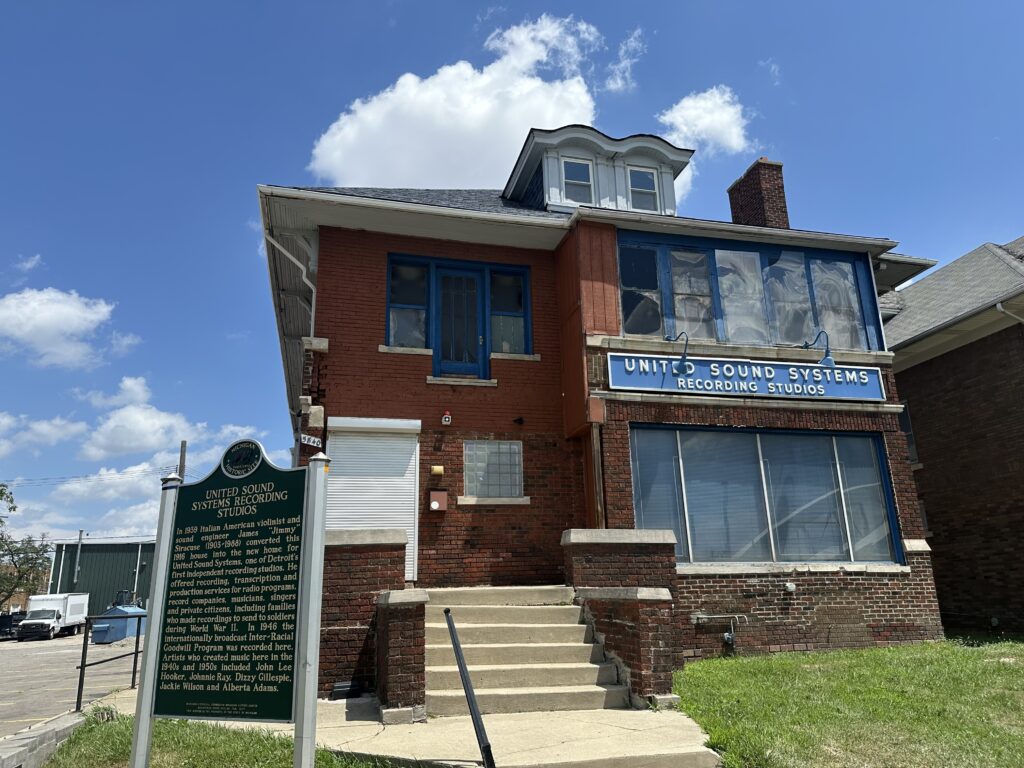
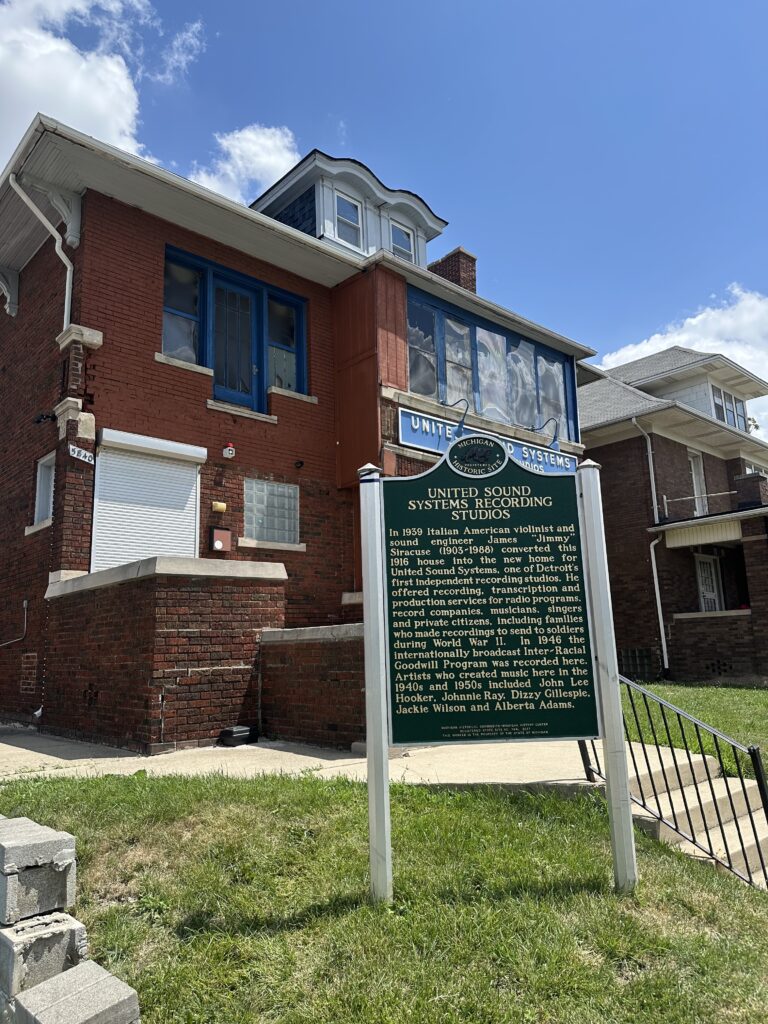
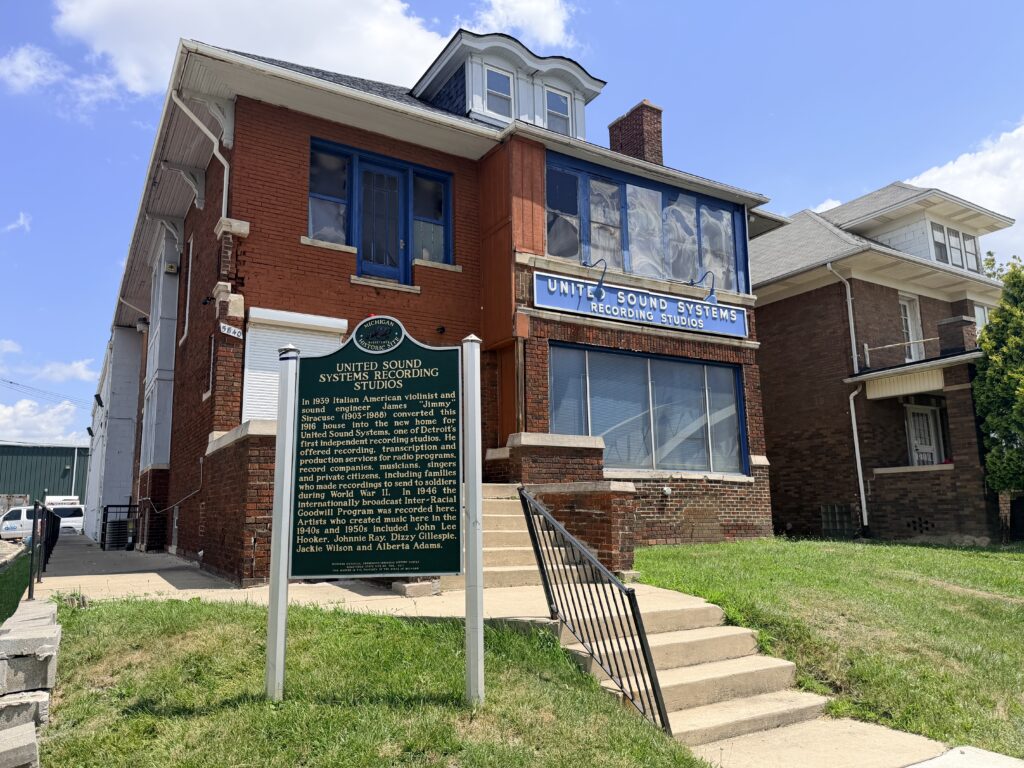
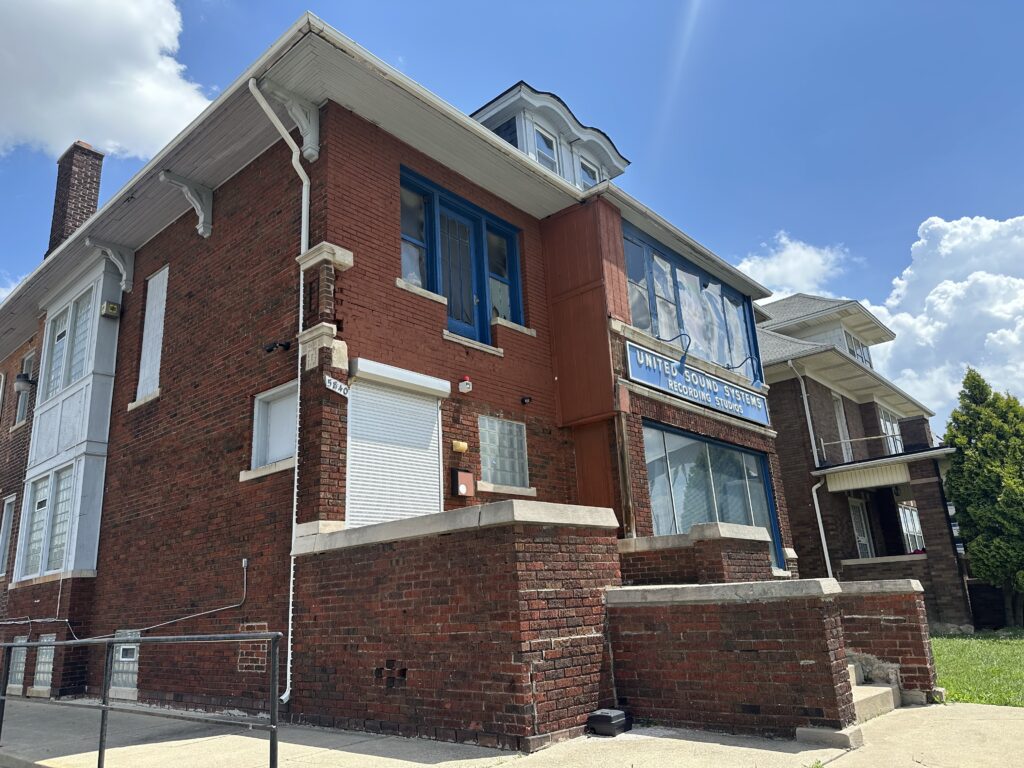
You could drive past it and feel nothing. We nearly did. It’s a two-story brick house on Second Avenue with a state historical marker out front and a brand-new bridge humming a few yards away — quiet, shut, not obviously anything. Which is a genuinely absurd thing to say about the building where the Detroit sound was invented.
United Sound Systems started in the early 1930s as a business making radio ads for the auto industry, run by an Italian immigrant violinist and sound engineer named Jimmy Siracuse. By 1939 he’d moved it here, into a 1916 house he converted — a trick nobody had really pulled before, bending a residential space into a professional studio. During the war, ordinary Detroit families came in to cut records to mail to soldiers overseas.
Then the roster. In December 1947, Miles Davis, Charlie Parker, and Max Roach recorded here for Savoy. The next year John Lee Hooker walked in and cut “Boogie Chillen’,” a solo performance of voice, electric guitar, and stomping foot that went to number one and effectively invented a genre. Dizzy Gillespie ran his own label out of the building in the early ’50s. Jackie Wilson started his hit run here. And in 1958, a young producer named Berry Gordy recorded Marv Johnson’s “Come to Me,” which became the first single ever released on his Tamla label — the seed of Motown. Here’s the part nobody tells you: Gordy then went and bought a house a few blocks away and converted it into a studio, exactly like Siracuse had. Hitsville is the sequel. This is the original.
It kept going for another half century. Marvin Gaye tracked here. The MC5, the Rolling Stones, Bob Seger, Aretha and the Eurythmics on “Sisters Are Doin’ It for Themselves.” Funkadelic recorded almost everything they ever made in this building — which means techno and hip-hop both trace a line back through these walls too.
And now the hard part. The studio went dark in 2018, and MDOT bought the building and its parking lot for $1.7 million to clear the way for the I-94 expansion. Officially this was a rescue: the state’s plan is to pick the house up, shift it north onto the lot, and auction it to a new owner. Years later, there’s still no cost, no timeline, and no buyer. Preservationists have raised an objection that’s hard to argue with — the studio is in the basement. You cannot lift a basement out of the ground. Move the house and you may save the shell of the thing while leaving the actual room behind.
There’s a particular sting to a highway doing this again. The same agency is currently trying to atone for what I-375 did to Black Bottom and Hastings Street, where the clubs that fed this studio its musicians once stood. Those didn’t survive. This one, so far, has.
So: no tours, no ticket, nothing to go inside for. What you can do is stand on the sidewalk on Second Avenue, read the marker, look at an unremarkable brick house, and know what it is. We did, and it landed harder than we expected.
The Look
Find It
5840 2nd Ave, Detroit, MI 48202, USA