
Motown & Detroit Soul
Eleven landmarks, one afternoon, and the city that made the sound.
- Stops 11
- Time Half a day, give or take
- Cost Free guide
- Best by Car
The guide is free. Admission, food, drinks and parking along the way are on you.
You can do this entire route without leaving your car. Nine of these stops are private homes with people living in them right now, and the tenth is a working studio you can't get into. If you'd rather stay in the driver's seat at every stop, you'll miss nothing.
The route in Google Maps, in parts
Berry Gordy borrowed $800 from his family and didn’t build a studio. He rented one — a converted house on Second Avenue that had been making records since the thirties. The song he cut there sold well enough that later the same year he bought a house on West Grand Boulevard and hung a sign in the front window that said Hitsville U.S.A.
What came out of that house rearranged American music.
Here’s what surprises people who come to Detroit looking for Motown: it isn’t in one place. There’s no Motown district. The story is scattered across a dozen ordinary blocks — a brick colonial here, a bungalow there, a street in the North End where two kids who’d sell a hundred million records between them grew up four doors apart.
This is the route we’d give a friend: eleven stops in the order that makes the story work, which happens to also be the order that makes the drive work.
A few of these stops belong to people who never recorded a note for Motown. We left them in on purpose. It’s the more interesting story, and we get to it at stop eight.
Stop 1
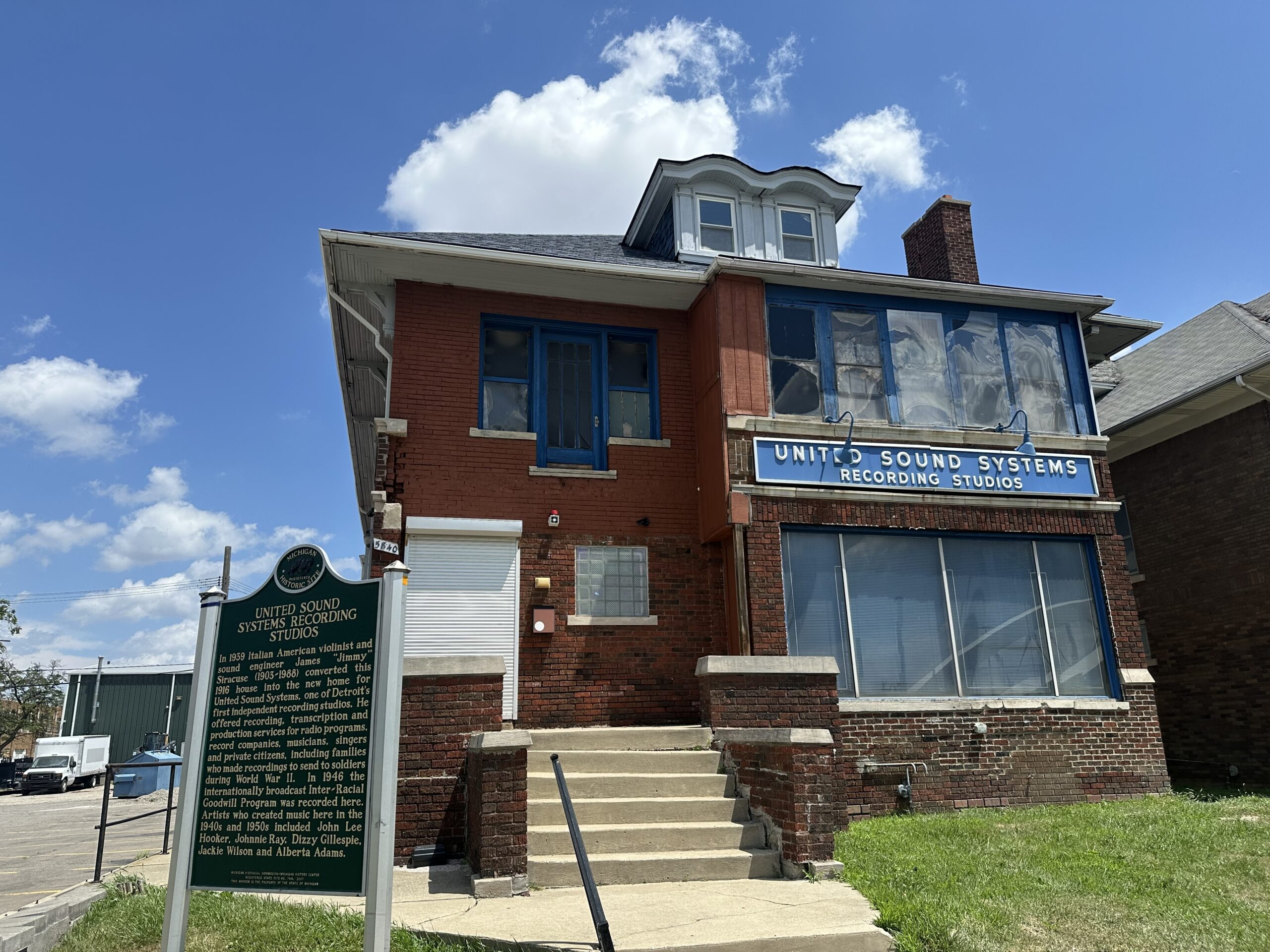
United Sound Systems
VisitingSidewalk only
Start here, not at Hitsville. This is where it actually begins, and it’s under a mile from stop two.
On January 12, 1959, Berry Gordy sat at his parents’ dining table and asked his family for a loan out of the Ber-Berry Co-Op. He got $800. He rented a room in this converted house and cut a song called “Come To Me” with a twenty-year-old singer named Marv Johnson. The players on that session included Benny Benjamin on drums and James Jamerson on bass — which means the rhythm section that would define Motown was already at work before Motown had a building.
It came out on January 21, 1959 as Tamla 101, the first record his label ever released. It was a local hit, but Gordy didn’t have the muscle to push it nationally, so he signed Johnson to United Artists. Their re-release went national and brought back a $3,000 advance. Later that year, Gordy bought the house at 2648 West Grand Boulevard.
He rented a room, made a record, and the money from that record bought the house you’re about to stand in front of.
The building opened in the 1930s under Jimmy Siracuse and picked up the nickname “Temple of Sound.” John Lee Hooker cut “Boogie Chillen'” here in 1948. Charlie Parker, Miles Davis, Aretha, Parliament-Funkadelic, the Rolling Stones.
Sources online describe United Sound as a working studio offering tours. When we went, the building was buttoned up — no visitor signage, nothing suggesting you could walk in. There's a plaque out front you can read from the sidewalk, and that's the visit. Don't count on getting inside.
Recommended listening
"Come To Me" — Marv Johnson, 1959
The record cut in this building. The one that bought the house.
Stop 2
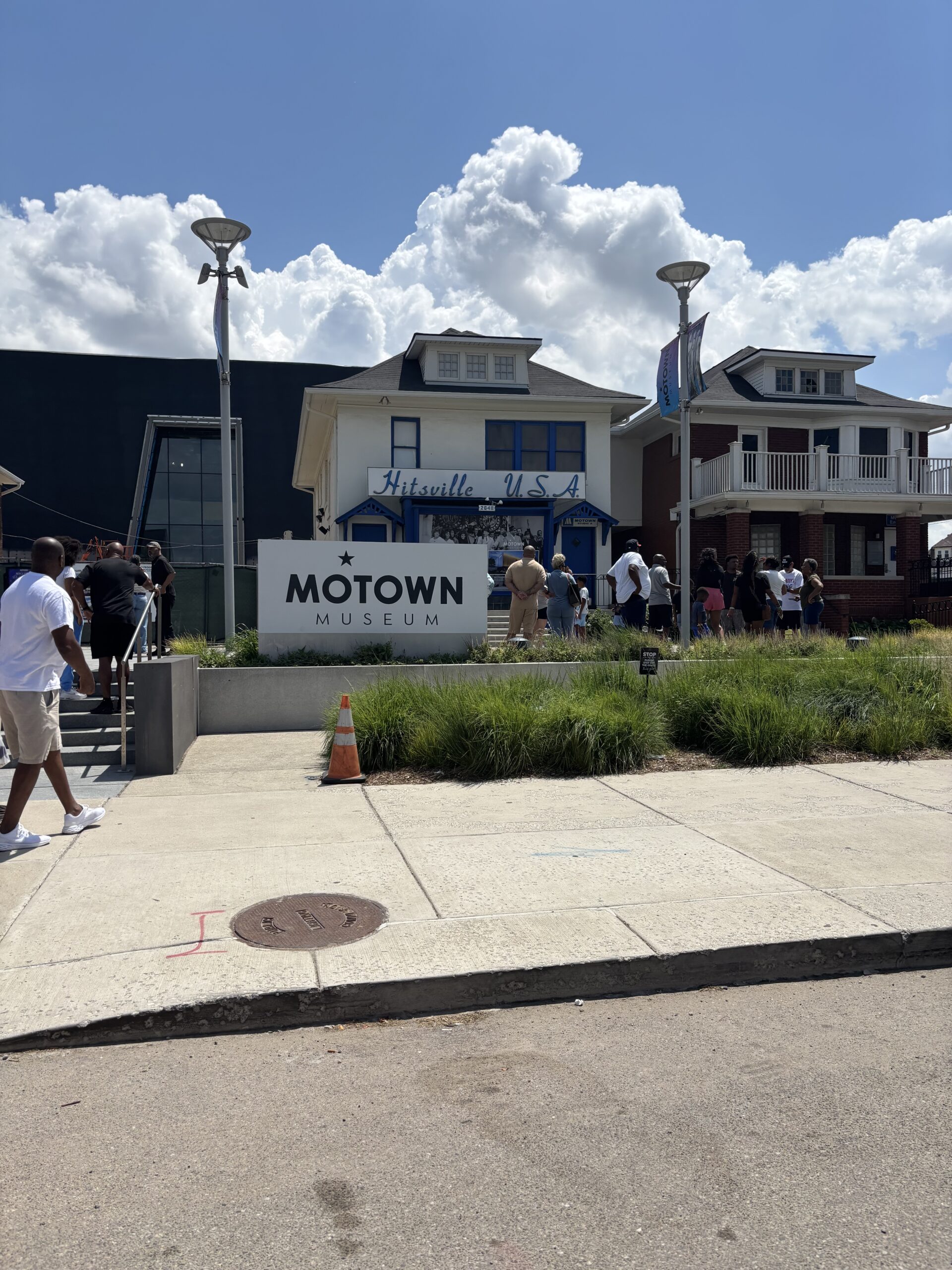
Motown Museum
VisitingTicketed
The house the rental money bought.
Gordy put the recording equipment in what had been the garage, moved his family in upstairs, and hung a hand-lettered sign in the front window. Studio A ran in shifts that went past midnight. Nearly every record you’re thinking of came through that room.
Everything else on this route is downstream of this address — including, as it turns out, a few people who never worked here at all.
Guided tours inside Hitsville are paused while the museum finishes its expansion, with reopening planned for spring 2027. Come anyway. The gift shop is open, the house is visible from the sidewalk, and the sign in the window is the photograph you came for.
Recommended listening
"Shop Around" — the Miracles, 1960
Motown's first million-seller. You'll meet Smokey on Belmont in a few stops.
Stop 3
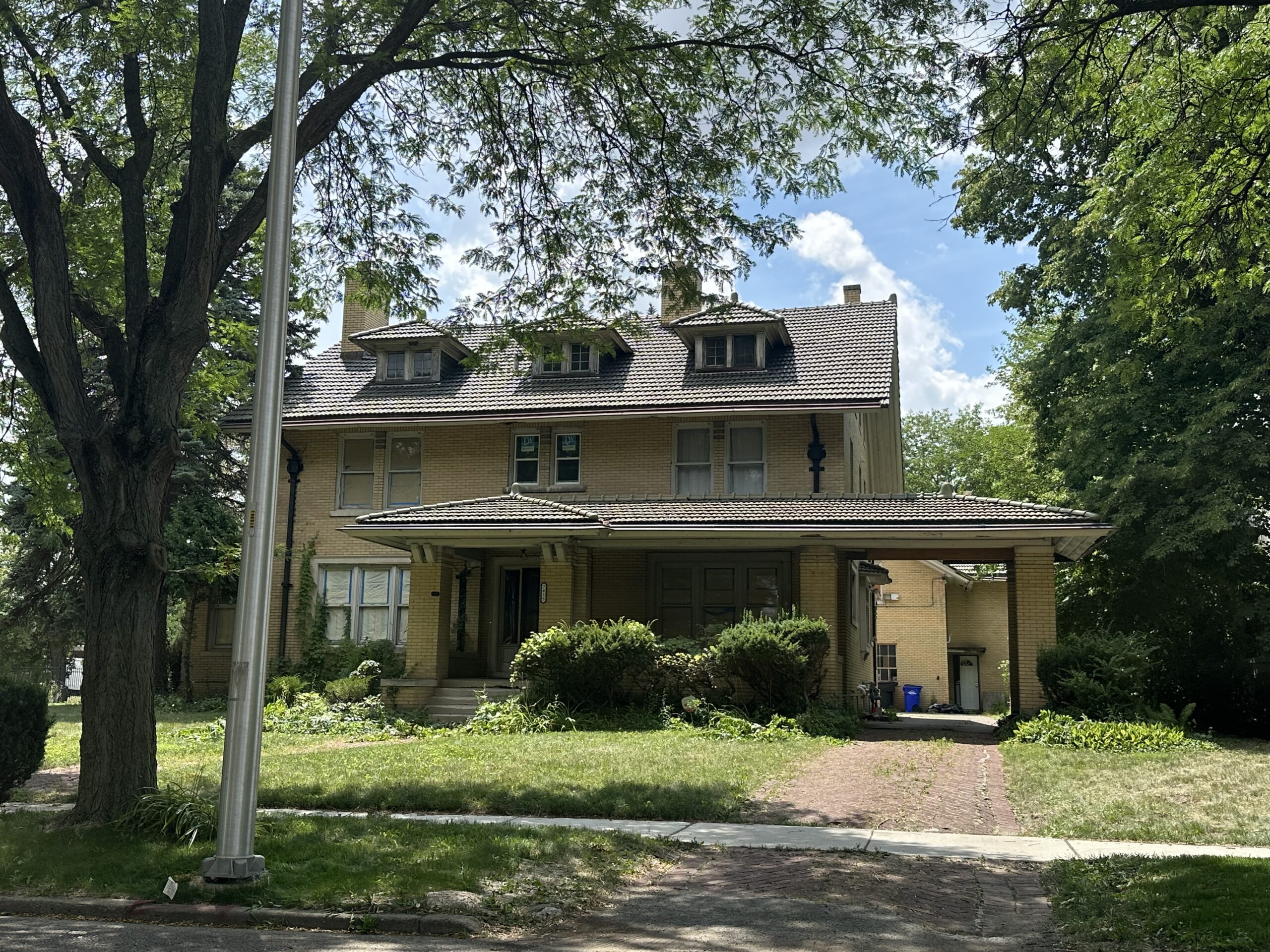
Aretha Franklin’s Childhood Home (C.L. Franklin House)
Recorded forColumbia, then Atlantic — never MotownVisitingSidewalk only
Five minutes from Hitsville, and that proximity is exactly why it’s stop three: the Queen of Soul grew up a short drive from Motown’s front door and never recorded a note for it. She signed with Columbia at eighteen and became Aretha at Atlantic.
The Franklin family moved in when she was five, and she stayed until she was eighteen. It’s a 1922 colonial with Tudor flourishes — six bedrooms, five baths, Pewabic tile, original hardwood, a carriage house out back. Her father, Rev. C.L. Franklin, was a nationally known preacher and a civil rights leader close to Dr. King, which meant Nat King Cole, Mahalia Jackson, Clara Ward, and Sam Cooke were coming through the front door while a teenage Aretha was upstairs. She later said it was the most beautiful home she had ever seen.
It sat abandoned for years. It’s changed hands since, and the current owner has been public about restoring it.
Recommended listening
Her 1956 gospel sides, then "Respect" (1967)
Eleven years and a different record company. Play them back to back and the whole point of this route lands in four minutes.
Full listing: Aretha Franklin’s Childhood Home (C.L. Franklin House)Get directions
Stop 4
Ray Parker Jr.’s Childhood Home
Recorded forNo label yet — later AristaVisitingSidewalk onlyOur visitNot yet
A short hop from Aretha, and the third kind of not-Motown on this route.
Ray Parker Jr. came up in Hamilton Bohannon’s house band at the 20 Grand, the Detroit club where Motown acts played when they came through. Bohannon recruited him at about fifteen with a pitch that was hard to believe — I’m the big band leader at Motown, I hire all the people, I hired James Jamerson — and a teenage Parker genuinely wondered whether the man was making it up. He wasn’t. Parker ended up playing behind the Temptations, Gladys Knight and the Pips, Stevie Wonder, and the Spinners, who liked him enough to put him in their touring band. At sixteen he was recording and co-writing with Marvin Gaye.
His own records came later and somewhere else. Arista, 1977. Raydio, then “The Other Woman,” then in 1984 a movie theme that made him permanently famous.
That’s the Funk Brothers story in one house. You have heard Ray Parker Jr. playing on Motown records. You have never seen his name on one.
Remember him at stops nine and ten.
Recommended listening
Something from Stevie Wonder's *Talking Book* (1972), then "Ghostbusters" (1984)
The uncredited kid and the household name. Same guy, twelve years apart.
Stop 5
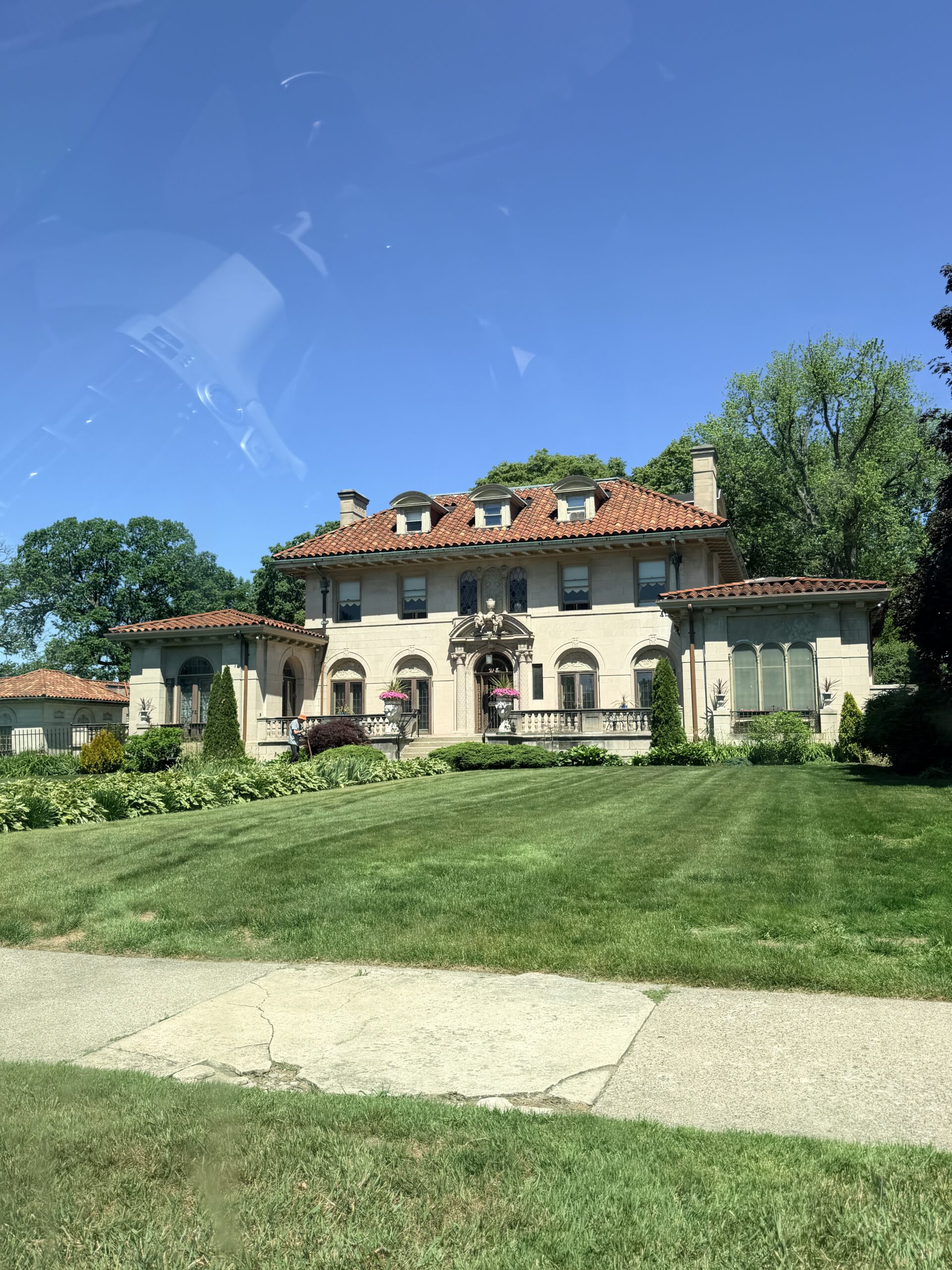
Berry Gordy House (The Motown Mansion)
VisitingSidewalk only
Ten minutes north, and the contrast does the work for you.
Gordy bought this after the money came in — a mansion in Boston-Edison, the neighborhood where Henry Ford had built a house decades earlier. From an $800 family loan and a rented room on Second Avenue to this, inside a decade.
He moved here in 1967, and the house he left behind is stop nine. Keep that in mind when you get there.
Recommended listening
"Money (That's What I Want)" — Barrett Strong, 1959
Gordy co-wrote it. You're standing in front of what it bought.
Full listing: Berry Gordy House (The Motown Mansion)Get directions
Break
The Congregation
VisitingRestaurant or bar
You’ve done five stops and roughly an hour and a half. This is the natural break, and it’s a few blocks from Gordy’s front door.
Four Boston-Edison neighbors opened The Congregation in 2020 in a 1924 sanctuary built as Unity English Lutheran Church, and rather than gut the place they restored it: original maple floors, the stained glass, an 1870s pipe organ still standing in the northwest corner. Coffee in the morning, cocktails at night, pizza next door at The Rectory from the same partners.
A converted church on a route about people who learned to sing in one. We’ll leave that there.
Dark on Mondays — plan around it.
Stop 6
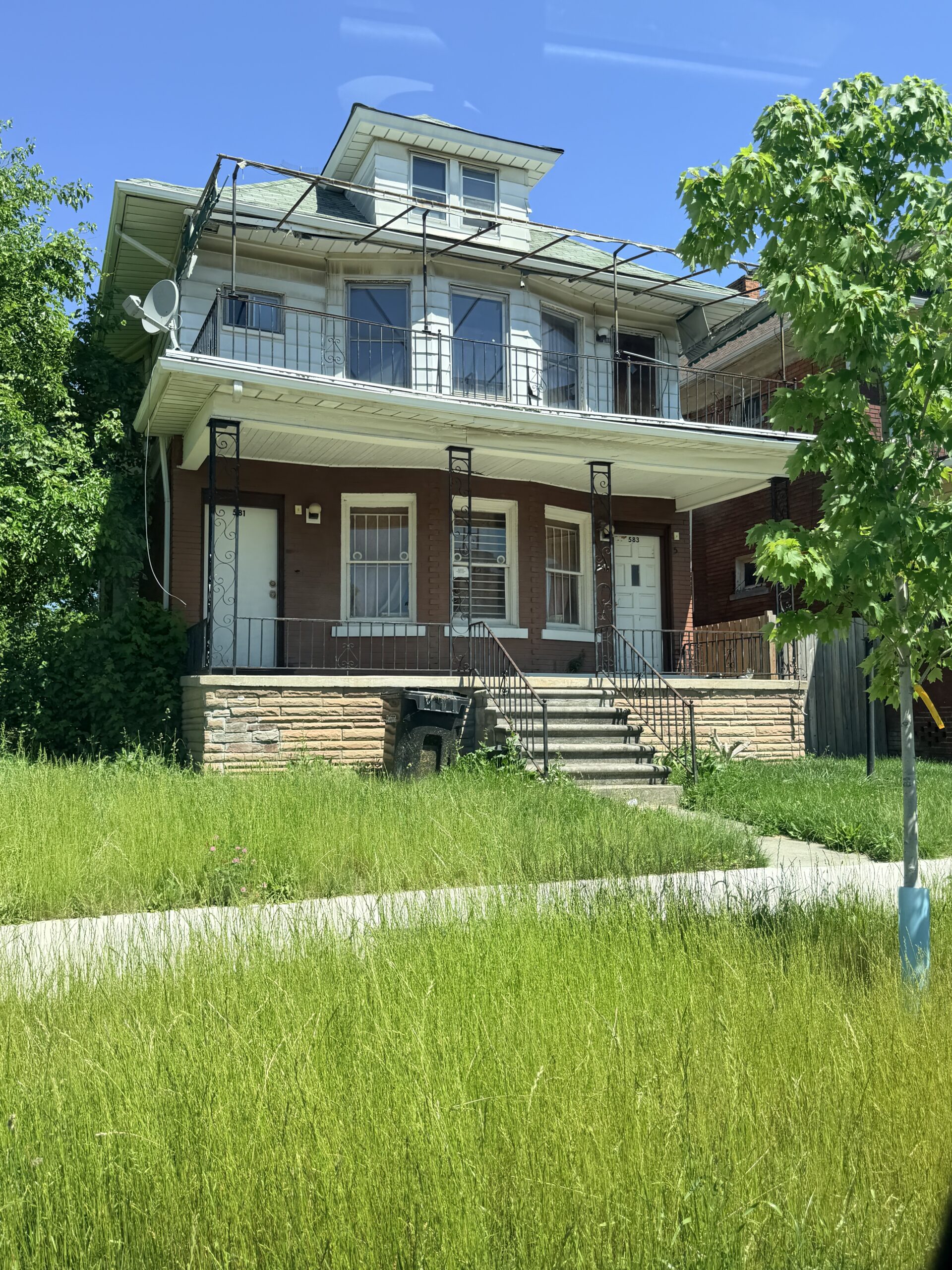
Smokey Robinson childhood home
Recorded forMotown / TamlaVisitingSidewalk only
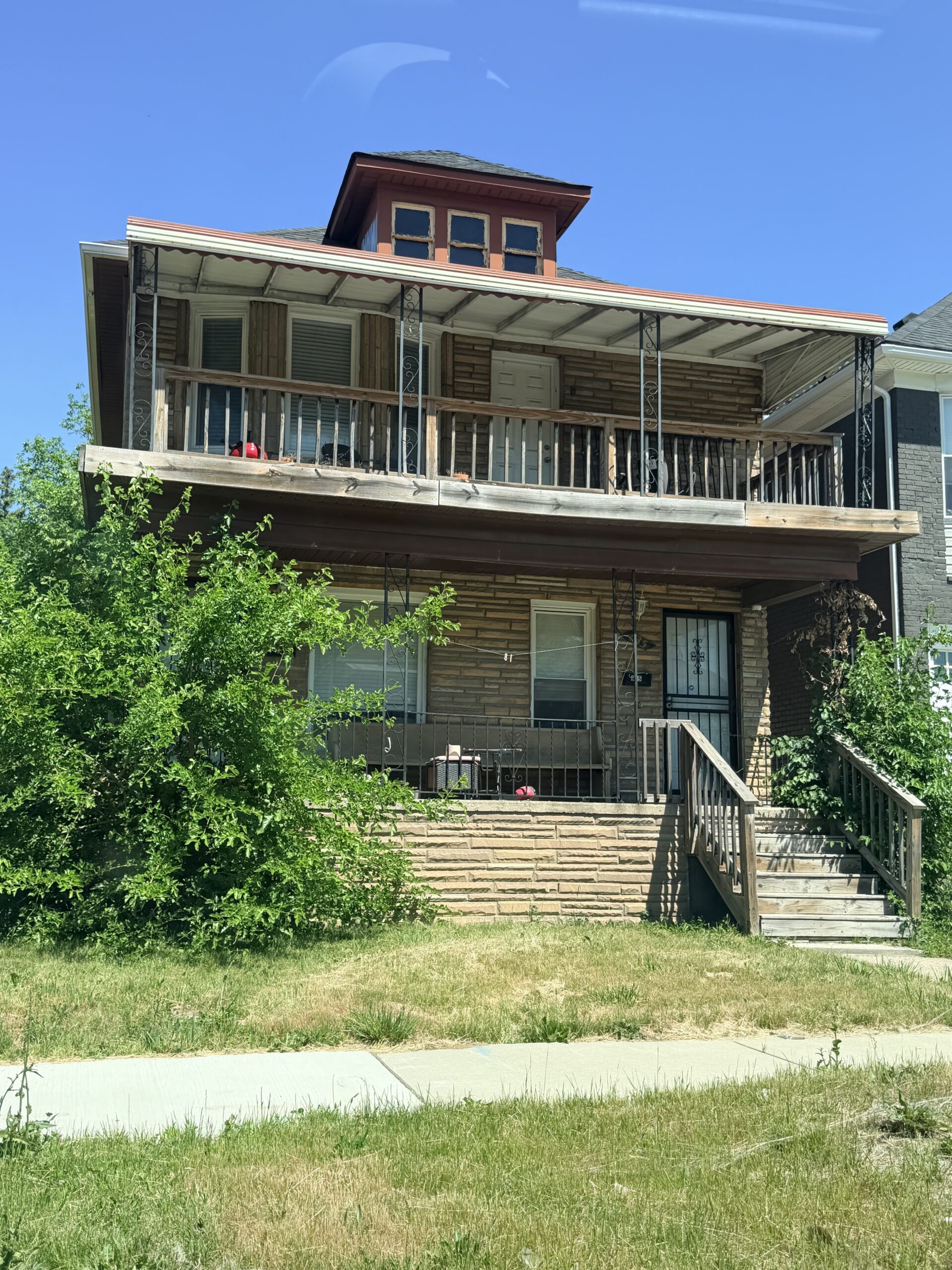
Smokey grew up at 581 Belmont. Diana Ross grew up at 635. Same street, four doors apart, and they met as kids around age eight because on a block that short you couldn’t not. An uncle started calling him “Smokey” somewhere along here.
He formed his first group in high school — the Five Chimes, then the Matadors, then the Miracles, one of the first acts Gordy ever signed.
Recommended listening
"The Tracks of My Tears" — the Miracles, 1965
Stop 7
Diana Ross Childhood Home
Recorded forMotown / TamlaVisitingSidewalk only
Two of the biggest voices of the twentieth century, on one block, and nobody planned it.
We stayed in the car on Belmont. A woman came out of Diana Ross’s front door while we sat there and paid us no attention at all, which is about right — this is a street where people live, not a landmark.
Recommended listening
"Where Did Our Love Go" — the Supremes, 1964
Play it right after the Smokey track, as you drive the block. Two songs, two houses, four doors apart.
Stop 8
Jackie Wilson’s Detroit Home
Recorded forBrunswick — never MotownVisitingSidewalk onlyOur visitNot yet
The one people get wrong, and the best story here.
Wilson recorded for Brunswick. Not Motown, not ever. But before there was a Motown there was a struggling Detroit songwriter named Berry Gordy writing for him — “Reet Petite” in 1957, then “To Be Loved,” “That’s Why,” “I’ll Be Satisfied,” and in 1958 “Lonely Teardrops,” which went to number one R&B and gave Gordy his first top-ten pop hit as a writer.
He took those royalties, added the $800 loan from his family, and in January 1959 started a label called Tamla.
The man who never signed to Motown is the reason Motown exists.
Remember stop one? This is who paid for it.
Recommended listening
"Lonely Teardrops" — Jackie Wilson, 1958
The song that funded stop one. If you play one track on this whole route, make it this.
Stop 9
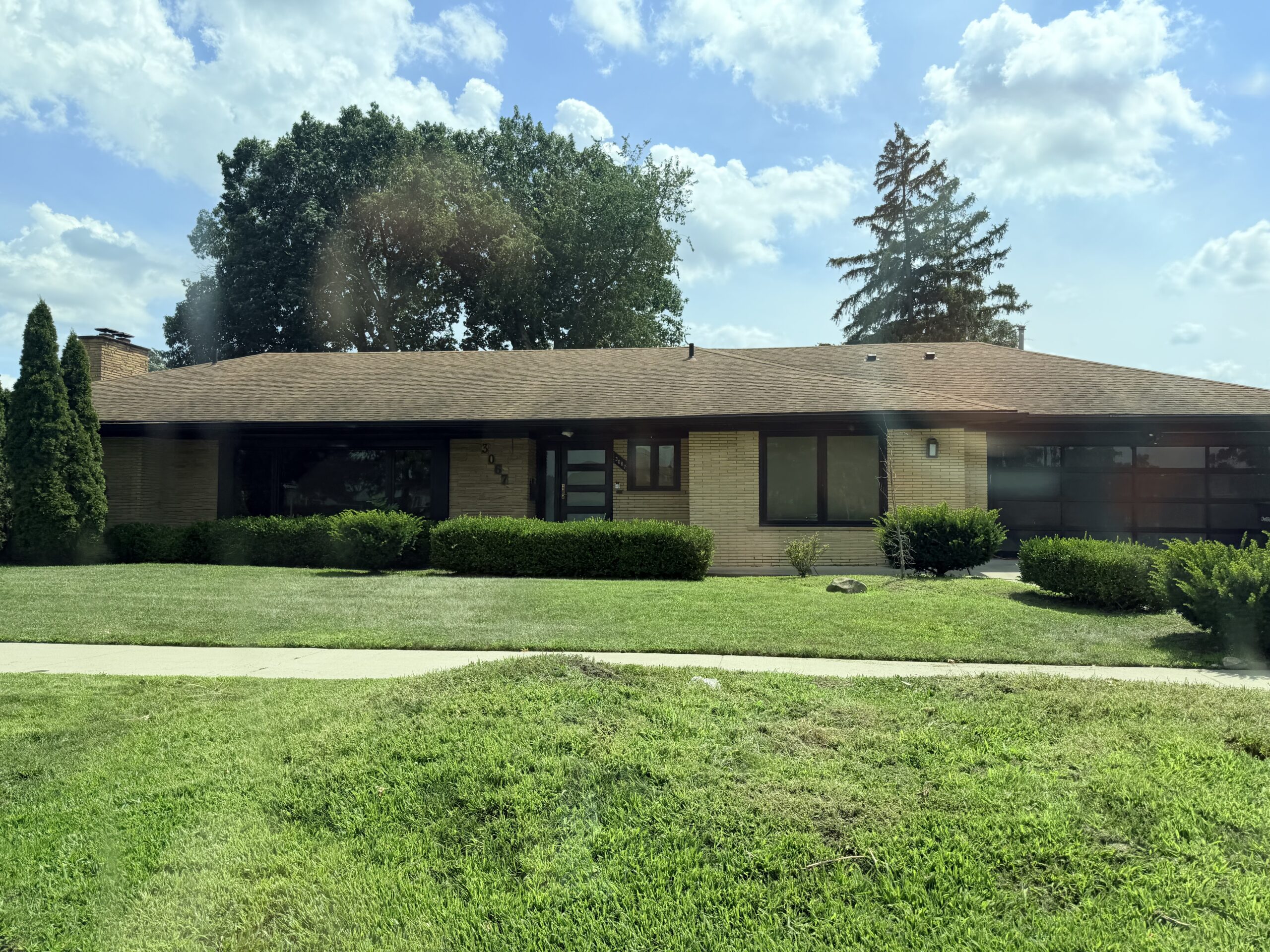
Marvin Gaye House
Recorded forMotown / TamlaVisitingSidewalk only
The most important address in Motown history that isn’t Hitsville, and the one with the most complicated family story.
Gordy owned this house first. In 1967 he gave it to his sister Anna and her husband — Marvin Gaye — and moved to the mansion on West Boston you saw at stop five. The house was, in effect, a Gordy family gift to that marriage.
Three years later Marvin was holed up here, grieving Tammi Terrell and exhausted by Motown’s hit formula, working out What’s Going On at the piano in the black-velvet room. Detroit Lions players Lem Barney and Mel Farr wandered into his orbit and ended up singing background vocals on the record.
The marriage that got this house didn’t last. When Anna filed for divorce, Marvin was broke. His lawyer proposed that instead of the million she’d asked for, Marvin hand over his next album’s $305,000 advance plus the first $295,000 in royalties. Anna agreed. The judge signed it. The album was Here, My Dear, released in December 1978 — a double record about the end of that marriage, with an inner sleeve showing a hand passing a record across a board game labeled JUDGMENT.
The legend is that he tanked it deliberately so she’d get nothing. He didn’t. The agreement said that if the album failed to earn $293,000 in two years, Marvin owed the difference himself. He had no reason to make a bad record. It sold badly anyway, and he died still owing the money.
He recorded it in Los Angeles — Motown had moved west by then. This is the What’s Going On house.
Recommended listening
"What's Going On" (1971), then "You Can Leave, But It's Going to Cost You" (1978)
One was written in this house. The other is the epilogue, recorded 2,000 miles away.
Stop 10
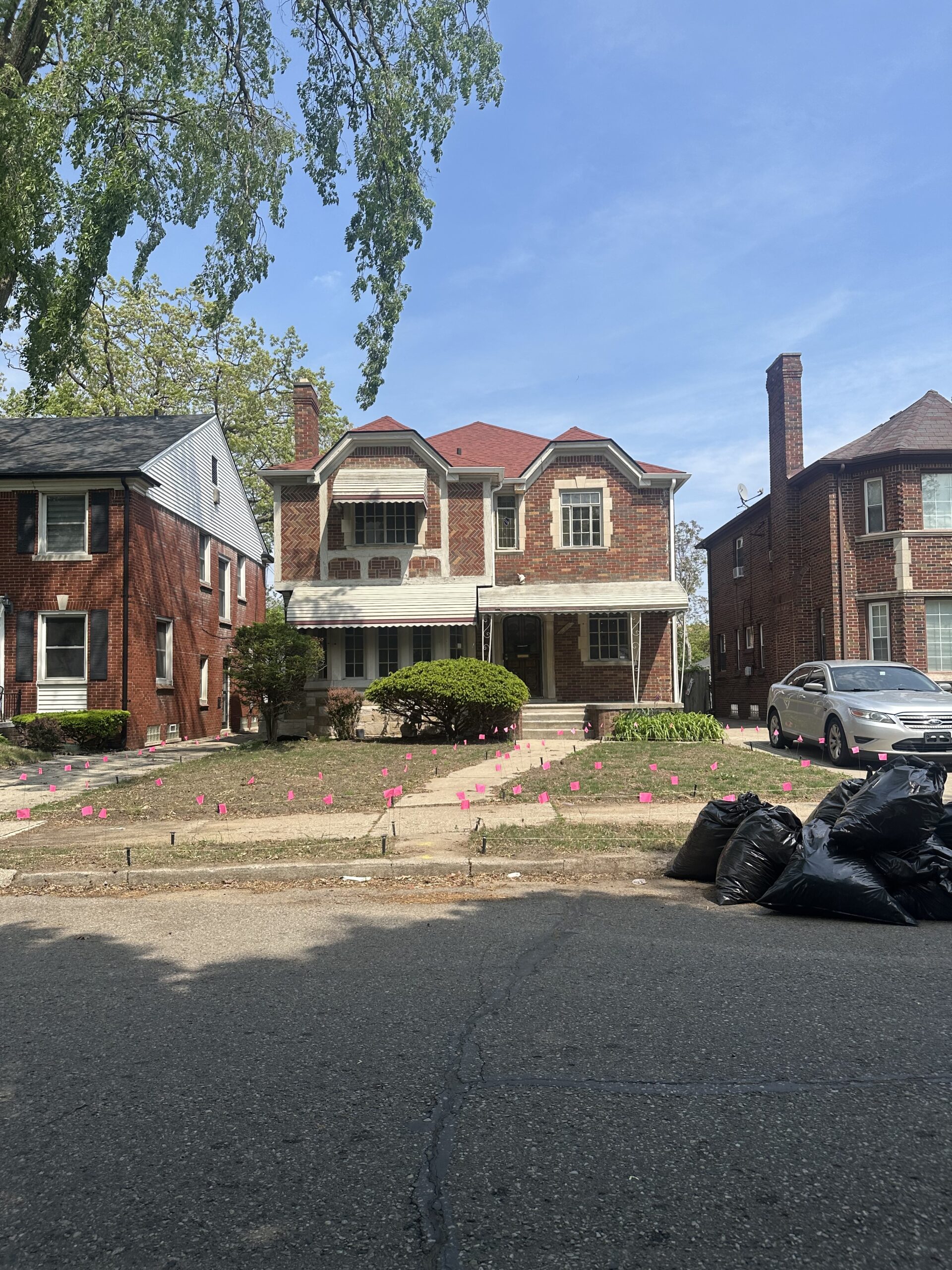
Stevie Wonder’s Childhood Home
Recorded forMotown / TamlaVisitingSidewalk only
A few minutes from Marvin, in the same neighborhood.
Worth saying plainly, because the internet gets this wrong: this house is still standing. Search around and you’ll find sources claiming it was torn down. It wasn’t. It’s on Greenlawn in Bagley, and we have the photograph.
The kid who lived here practiced harmonica and piano in the basement. Neighbors remembered spotting him in a baby-blue tuxedo, heading out to a Motown show. He cut his first album at twelve and became the youngest artist ever to top the chart.
In 1972 he called Ray Parker Jr. — the kid from stop four — to ask him to play the Rolling Stones tour. Parker assumed it was a crank call and hung up. Wonder called back and sang “Superstition” down the line until Parker believed him.
Recommended listening
"Fingertips (Pt. 2)" (1963), then "Superstition" (1972)
A number one recorded when he was twelve, and the song he sang down a phone line to convince Ray Parker Jr. the call was real.
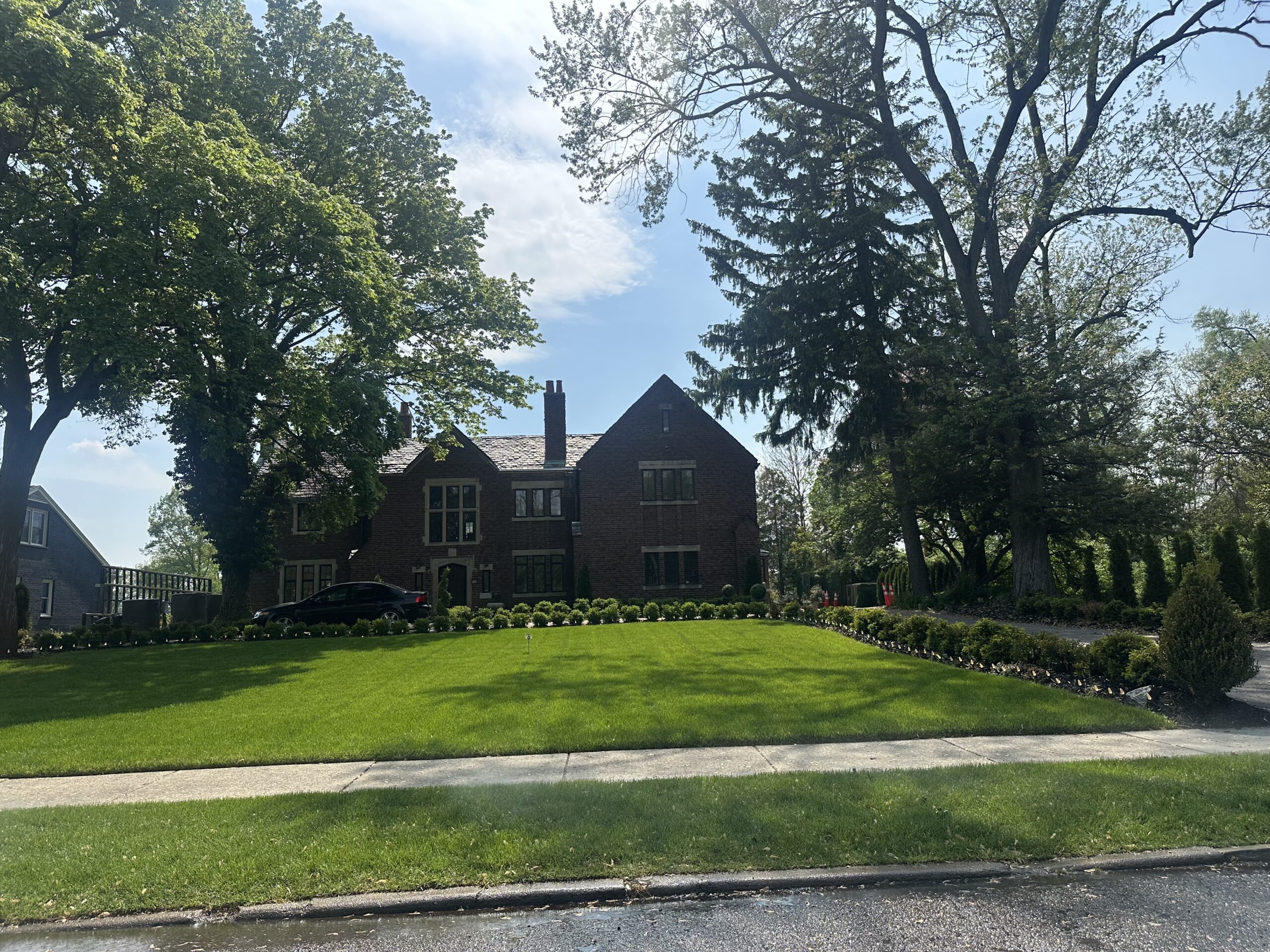
Stop 11
Aretha Franklin House (The Rose Estate)
Recorded forColumbia, then Atlantic — never MotownVisitingSidewalk only
End where the story ends.
This isn’t where she grew up — that was stop three. This is the 1927 Palmer Woods house she bought in 1994 as a second Detroit home, a place for her famously enormous parties. It fell into disrepair after her death and has since been restored by owners who filled it with her photographs and memorabilia.
Two Aretha houses, one at each end of the route. Fifty years between them, and Motown never got her either time.
Recommended listening
"A Rose Is Still a Rose" — Aretha Franklin, 1998
She bought this house in 1994. The record came four years later. Coincidence, and a good one.
Full listing: Aretha Franklin House (The Rose Estate)Get directions