
Jack White’s Detroit: From Ferdinand Street to Third Man
Eleven stops, from the Southwest Detroit house where John Gillis grew up, past his ball field, his high school and the hotel from the song, to the Royal Oak room where, the story goes, Meg White poured drinks.
- Stops 11
- Time Most of a day, with a drink at the end
- Cost Free guide
- Best by Car (the first three stops are a few blocks apart, and so are the four in Midtown)
The guide is free. Admission, food, drinks and parking along the way are on you.
Two stops are private homes, so stay on the sidewalk. The Hotel Yorba is closed, Cass Tech is a working school, the Gold Dollar is an empty lot, and the Masonic Temple and the Magic Stick take a show ticket. The rest are a park, a record store and two bars. You’ll want a car to get from Southwest Detroit to Midtown, out to Indian Village and up Woodward to Royal Oak. We’ve been to 7 of these 11 stops. The four we haven’t, all new to our map, are marked.
The route in Google Maps, in parts
Stop 1
Jack White’s Childhood Home
The connectionWhere John Gillis grew upVisitingSidewalk only
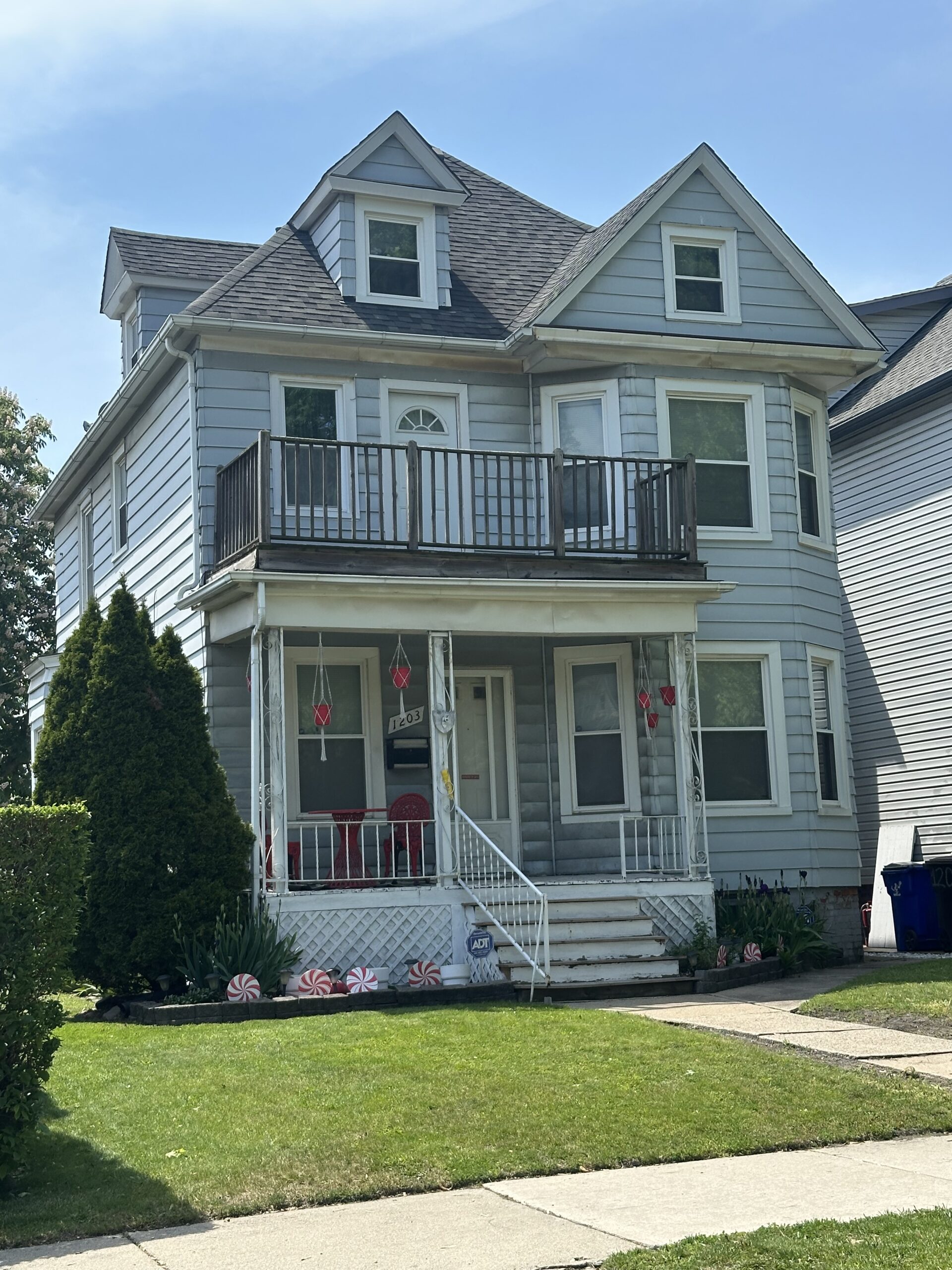
Start in Southwest Detroit, on Ferdinand Street in Mexicantown. John Anthony Gillis was born on July 9, 1975, the youngest of ten children, and grew up in this modest house. He was an altar boy at Most Holy Redeemer, the big parish church a few blocks away, and was accepted to a seminary before deciding against the priesthood.
At 15 he started an upholstery apprenticeship with family friend Brian Muldoon, who also got him into punk. Later he ran his own one-man shop, Third Man Upholstery, painted yellow and black, the colors and the name that brand everything he’s done since. He married Meg White in 1996 and took her name, and the White Stripes made their second album, De Stijl, on an eight-track in Jack’s living room.
The next two stops are a few blocks away, so this corner of the city makes an easy first hour.
It’s a private home. Stay on the sidewalk.
Recommended listening
“Dead Leaves and the Dirty Ground” — The White Stripes, 2001
From White Blood Cells, the album that made them famous.
Stop 2
Clark Park
The connectionHis childhood ball fieldVisitingOpen to visitOur visitNot yet
A few blocks east, on Clark Avenue, is the park where Jack played ball as a kid. Clark Park is Southwest Detroit’s big neighborhood park, and its neighbors have saved it twice. When the city shut it down in 1991, Anthony Benavides and a handful of residents formed the Clark Park Coalition, made the repairs themselves and took over running it. When the recession hit in 2008, they kept it open again.
Jack paid it back. He quietly put nearly $170,000 into rebuilding the baseball field and asked the coalition to leave his name out of it. Word got out in 2009, and he still didn’t want to talk about it.
It’s a working park full of kids’ programs, with one of the city’s few outdoor ice rinks in winter. Walk it, watch a game, and leave it the way you found it.
Stop 3
Hotel Yorba
The connectionThe song, recorded in room 206VisitingSidewalk onlyOur visitNot yet
Around the corner on West Lafayette, by I-75 and the Ambassador Bridge, is the 1926 hotel the White Stripes put in a song. “Hotel Yorba” was the first single from White Blood Cells, released in November 2001, and it was recorded in room 206.
The band shot most of the video outside after being refused permission to film in the halls, and Jack has said they were chased off by a manager with a gun. For years the building ran as subsidized housing. In September 2025 the city closed it over unsafe living conditions, and what happens to it next is unsettled.
It’s closed, so this is a look from the sidewalk. Put the song on in the car.
Recommended listening
“Hotel Yorba” — The White Stripes, 2001
Two minutes and change, and the reason you’re parked here.
Stop 4
Cass Technical High School
The connectionHis high schoolVisitingSidewalk onlyOur visitNot yet
Now drive up to Midtown and Cass Tech, Detroit’s selective public high school, on Second Avenue a few blocks south of the Masonic Temple. Jack started here at 14 and later told NPR it felt like suddenly going to Harvard. He played drums and trombone, and because the class required it, he learned a scale on the marimba, which turned up later on a White Stripes record.
He was in good company. Diana Ross, Lily Tomlin, Ron Carter, Donald Byrd and Alice Coltrane are all Cass Tech alumni.
The building he knew opened in 1922 and was torn down in 2011; the school moved into its current building, just north of the old site, in 2005. It’s a working high school, so look from the street and steer clear at drop-off and dismissal.
Stop 5
Detroit Masonic Temple
The connectionThe Jack White Theater, and a weddingVisitingTicketed
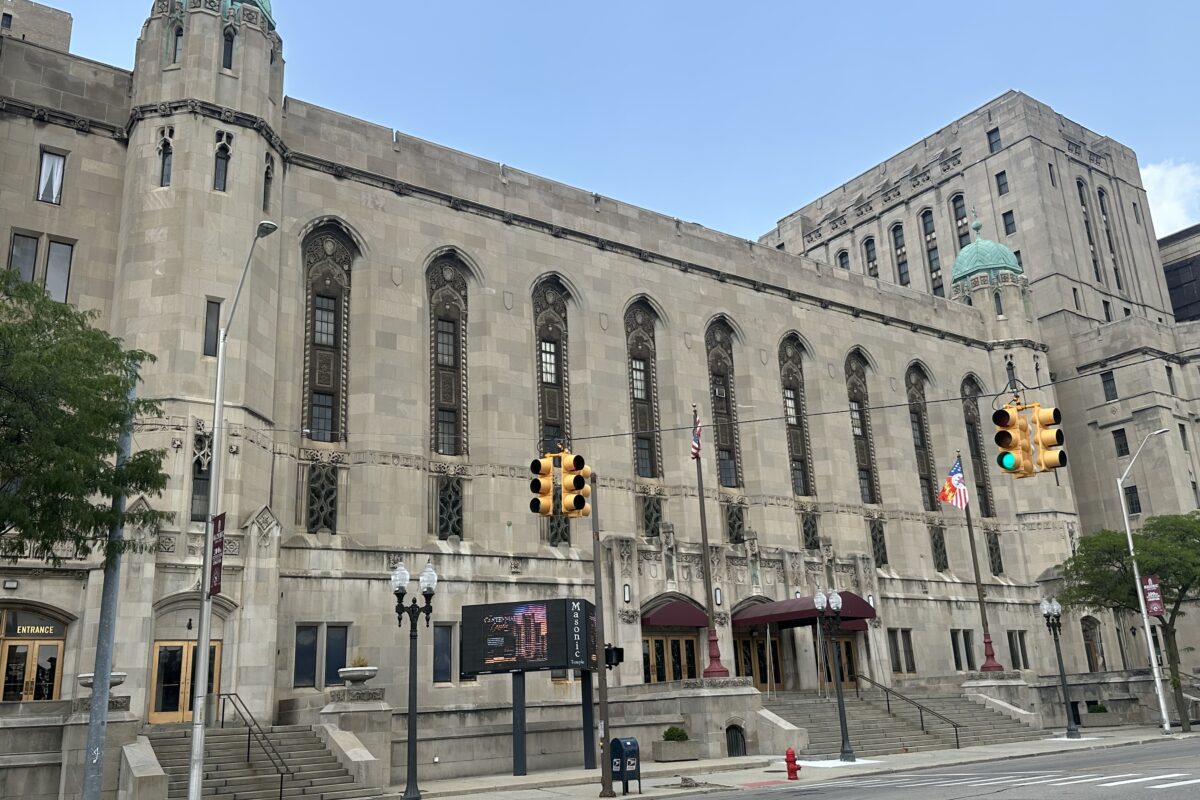
A few blocks north is the largest Masonic building in the world. Jack’s connection here is family: his mother, Teresa, once worked in the building as an usher.
In 2013 the temple owed Wayne County about $152,000 in back taxes and was facing foreclosure. Jack quietly paid $142,000 of it. The Masons thanked him by renaming the Scottish Rite cathedral, the building’s second theater, the Jack White Theater.
He gave the place another story in 2022. On April 8, opening his Supply Chain Issues tour here, he proposed to musician Olivia Jean onstage and married her on the spot.
You can get in two ways. Catch a show, maybe in the Jack White Theater itself, or book one of the temple’s building tours, sold ahead on TicketWeb (not at the door).
Stop 6
The Gold Dollar
The connectionThe White Stripes’ first show, July 14, 1997VisitingDemolished — site only
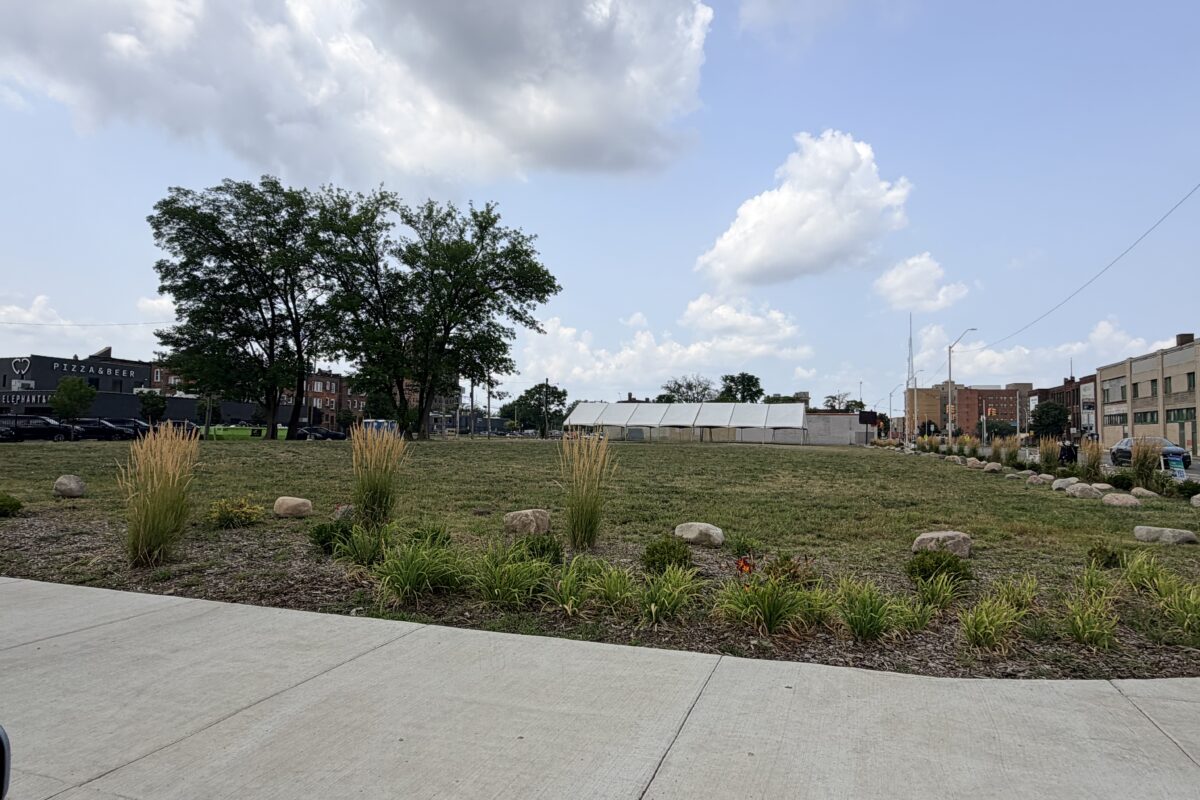
Up Cass, at Charlotte, is a mown lot. We drove down to see it, and there’s nothing there.
The Gold Dollar went up in 1934 as a beer garden and spent decades as a gay bar known for its drag shows, a chapter that ran longer than all the rest and rarely gets told. In 1996 Neil Yee reopened it as a music room, and for five years it was the heart of Detroit’s garage-rock scene.
On Bastille Day, July 14, 1997, a two-piece called the White Stripes played three songs at the open-mic night. Third Man has since released the recording as The First Show. Jack has joked that maybe it was their first practice, and Rocket 455 and the Hentchmen have spent years cheerfully disputing who the duo really opened for first.
Yee closed the bar in 2001. The building burned in a suspicious fire in July 2019 and came down that summer. Stand on the sidewalk and put on the song.
Recommended listening
“Let’s Shake Hands” — The White Stripes, 1998
Their first single, from the Gold Dollar years.
Stop 7
The Magic Stick
The connectionConan, a birthday show and a fightVisitingTicketedOur visitNot yet
Cut over to Woodward and the Majestic complex: a restaurant, the Garden Bowl and, upstairs, the Magic Stick. It was a hangout for the garage-rock scene the White Stripes came out of, and three Jack White stories land here.
The first is almost certainly here. Around 1999, Conan O’Brien was in Detroit with his crew at what he later described as a place where you could get a bite, go bowling and see a band. Some scruffy local kids joined them, and they drank beer and talked in the bowling alley for about three hours. Years later, when the White Stripes played Saturday Night Live, Jack and Meg walked up to him at rehearsal and said they’d met. He had no idea. Neither of them has named the spot on record, but we can’t think of anywhere else in town that fits.
The second is documented. On July 9, 1999, his 24th birthday, Jack played the Garden Bowl with a band called Jack White & the Bricks, on a stage built over lanes 11 through 14. Third Man later put it out on bowling-pin-white vinyl.
The third he’d probably rather forget. On December 13, 2003, Jack got into a fight upstairs with Jason Stollsteimer of the Von Bondies, a former friend turned rival, who ended up in the hospital. Jack pleaded guilty to assault and battery the next March and was ordered to pay $750 and take anger management classes.
The Magic Stick still books shows, and the Garden Bowl bills itself as the oldest active bowling alley in the country. Roll a frame. The kid in the next lane might be famous someday.
Stop 8
Third Man Records
The connectionThird Man Records Cass Corridor, since 2015VisitingOpen to visit
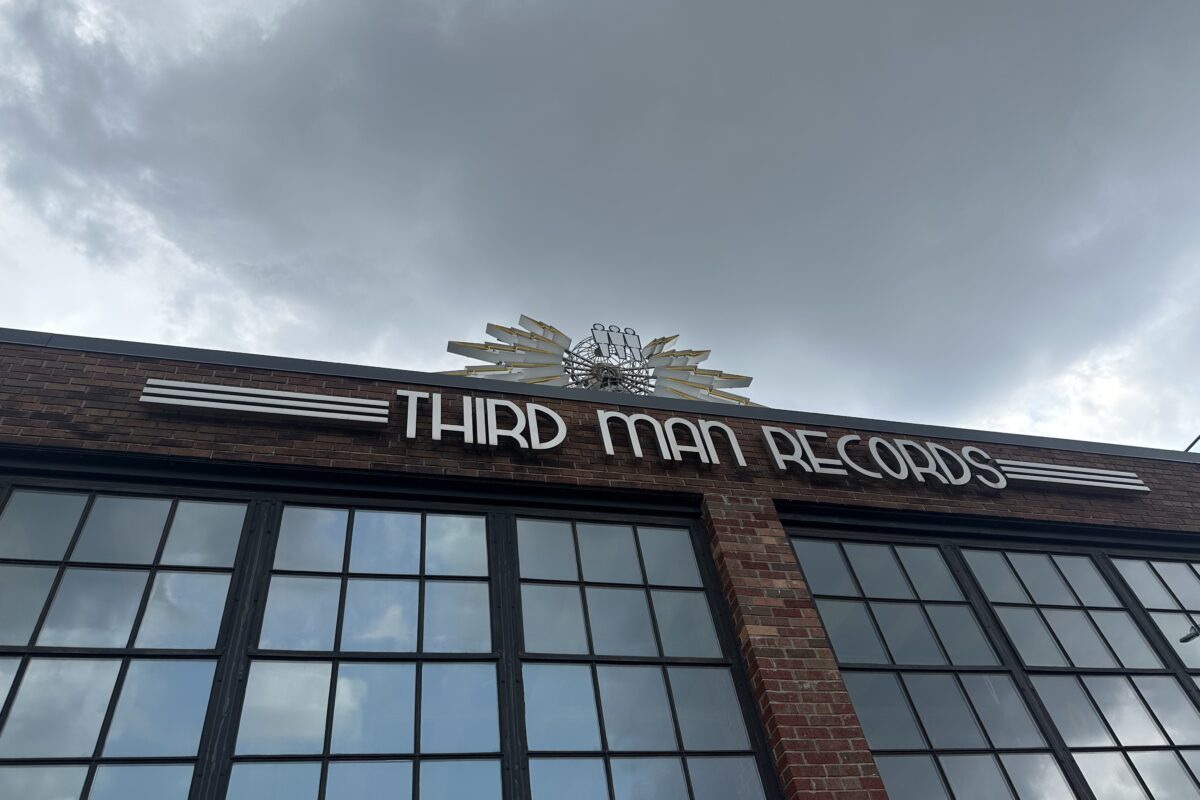
Head back over to West Canfield, where Jack brought his Nashville label home. Third Man Records opened its Cass Corridor store on Black Friday 2015, in the old Willys-Overland building it shares with Shinola.
The color scheme hits you first: the Third Man yellow and black, all the way back to the upholstery shop. Up front it’s a record store, with Third Man releases and a shelf of like-minded labels. Farther back there’s a small stage, and at the end of the hall a window looks straight into the pressing plant, where the records out front are made. It started running in 2017, the first record plant to open in Detroit in decades.
We keep coming back. Our latest haul was a limited blue pressing of Jack’s Frozen Charlotte, with a free poster tossed in; other visits have ended with a hoodie and a mug.
Give yourself time here. And yes, there’s a bathroom, which matters on a day in the car.
Recommended listening
“Seven Nation Army” — The White Stripes, 2003
The riff that became a stadium chant on three continents.
Stop 9
Jack White’s Mansion (Third Man Studios)
The connectionJack’s home at the White Stripes’ peak, until 2007VisitingSidewalk only
Head east to Indian Village, a historic district of grand early-1900s houses built for the city’s industrialists. When the White Stripes got big, Jack bought a 1914 house on Seminole Street, a few miles and a whole world from the bungalow on Ferdinand.
He set up a studio in it, and the band recorded Get Behind Me Satan here in 2005, working out of the staircase and foyer in what he called Third Man Studios. The album won the Grammy for best alternative music album. Neighbors remember early-morning rehearsals in warm weather, a free concert whether you wanted one or not.
He sold the house and moved to Nashville in 2007, where Third Man set up its headquarters.
Drive Seminole, Iroquois and Burns slowly; the whole neighborhood is worth it. This is a private home, so look from the street and keep going.
We went to get a photo, and the current owner was unloading groceries from the car. We decided not to be creeps. No picture, but we’ve been.
Recommended listening
“Blue Orchid” — The White Stripes, 2005
The first single from the album made in this house.
Full listing: Jack White’s Mansion (Third Man Studios)Get directions
Stop 10
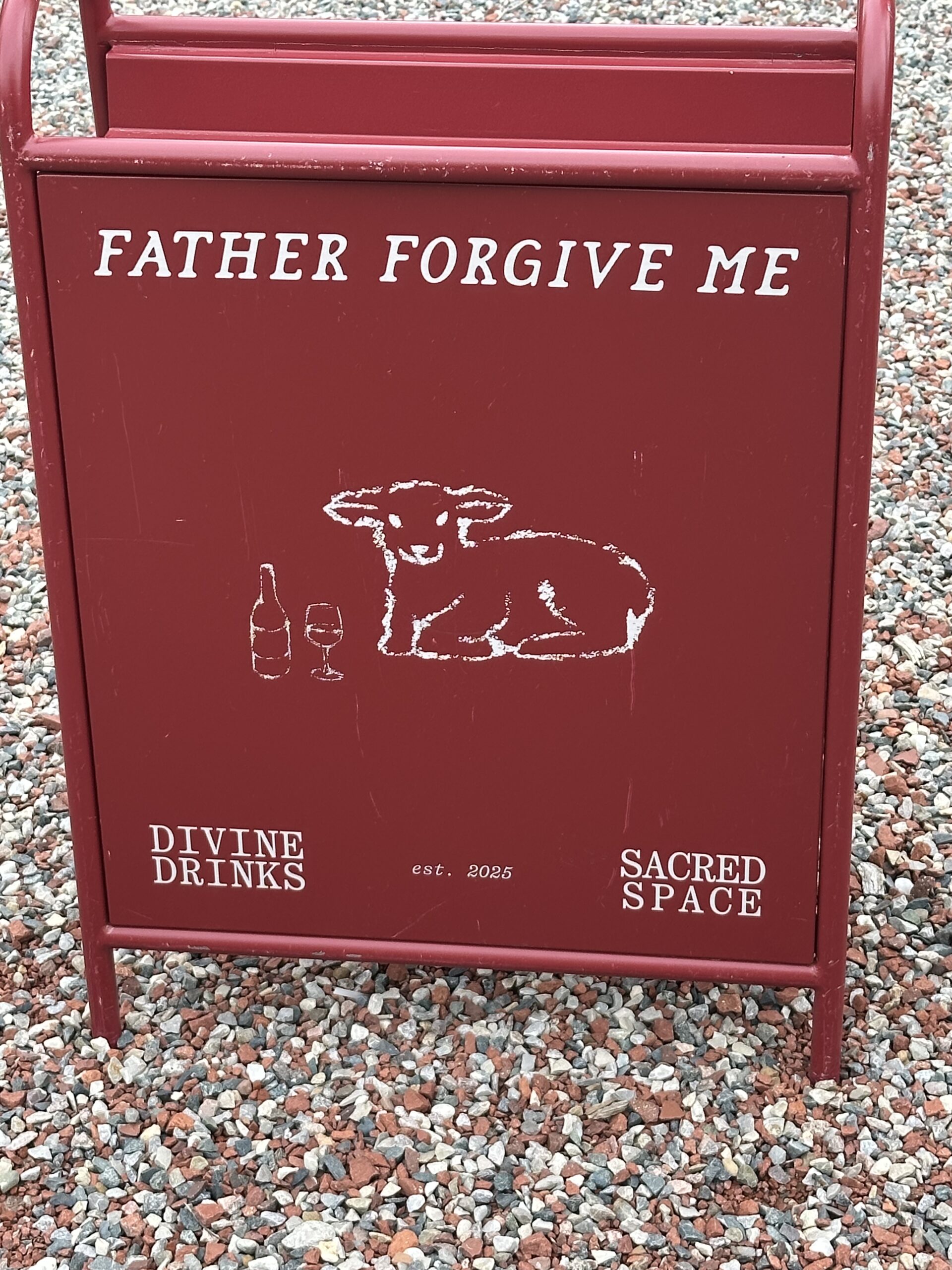
Father Forgive Me
The connectionNo connection, just a good jokeVisitingRestaurant or bar
A few minutes away, in Little Village, is a stop with no Jack White connection at all. We just couldn’t resist it after the kid who almost went to seminary.
Father Forgive Me is a cocktail bar in the former garage of the Shepherd, an old church turned arts campus. It made North America’s 50 Best Bars extended list for 2026, at No. 83, and it earns it: inventive drinks, some poured from custom tap handles, and an indoor-outdoor room surrounded by Charles McGee’s sculpture in the park outside.
The food is small plates for grazing, and the mortadella sandwich on grilled focaccia is the one people talk about. Warda, the James Beard-winning pâtisserie, is on the same campus.
It’s a good place to sit for a minute before the drive up Woodward.
Stop 11
Little Bella’s Pizza & Wine Bar
The connectionFormerly Memphis Smoke, where Meg reportedly tended barVisitingRestaurant or bar
Finish in Royal Oak, at 100 South Main. Today it’s Little Bella’s, a low-lit Italian spot with a serious cocktail program. For years before that, the same room was Memphis Smoke, a barbecue joint and blues club that the Detroit Blues Society still counts among the area’s historic blues rooms. Thornetta Davis played it, Canned Heat played it, and so did Mike, back in his blues band days. It closed in 2010.
The first time we ate here, Mike asked the guys at the next table if they knew where Memphis Smoke used to be. One of them said, “You’re sitting in it.” Then he told us about Meg.
Here’s the story you’ll hear in this room: Meg White was tending bar at Memphis Smoke when she met Jack. Meg was a bartender by trade, and that much holds. Where they met is murkier. Some accounts say a coffee shop, the Detroit Historical Society says only “a local restaurant,” and at least one says it happened here. We can’t prove it, and we can’t prove the guy wrong.
Meg has stayed out of public life since the band split in 2011, and by most accounts she still lives in the Detroit area. She’s earned her privacy, so that’s all we’ll say.
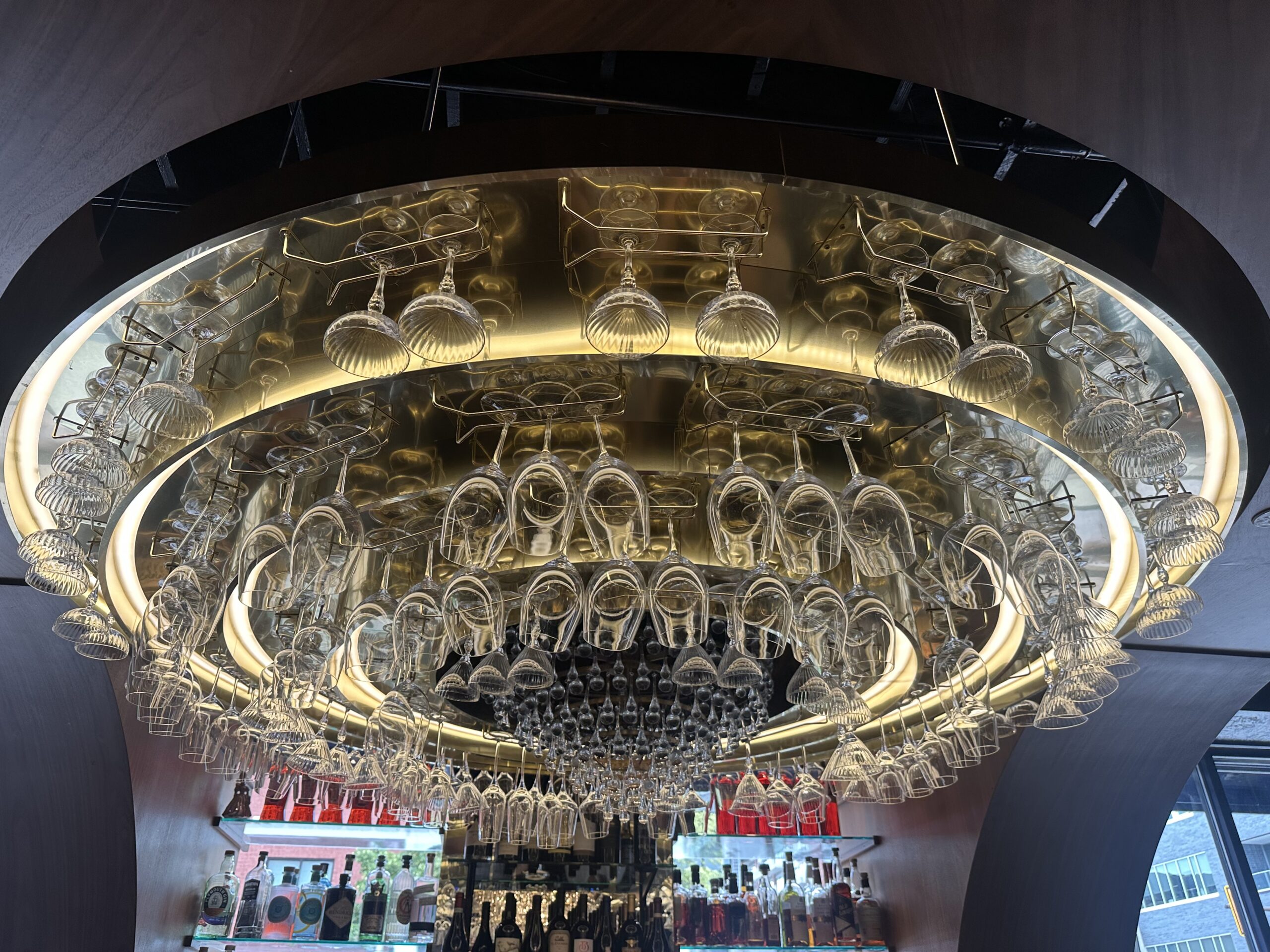
Get a seat at the bar, order a drink, and look up at that ceiling.