
Made in Detroit: Still Making It
Ten stops, from a coney counter downtown to a pizza pan on Conant, where Detroit still makes the things it’s known for.
- Stops 10
- Time A full day, with time to eat
- Cost Free guide
- Best by Car (Shinola and Motor City Brewing Works are across the street from each other)
The guide is free. Admission, food, drinks and parking along the way are on you.
Most of these stops are shops, restaurants, bars or a museum you can walk into. Faygo is a working plant you look at from the street, and Better Made has a store at its factory. Shinola and Motor City Brewing Works face each other on Canfield, and Carhartt is a short walk up Cass, but you’ll want a car for the rest. We’ve been to four of these ten stops. The other six are marked, and we’d love your help with them.
The route in Google Maps, in parts
Stop 1
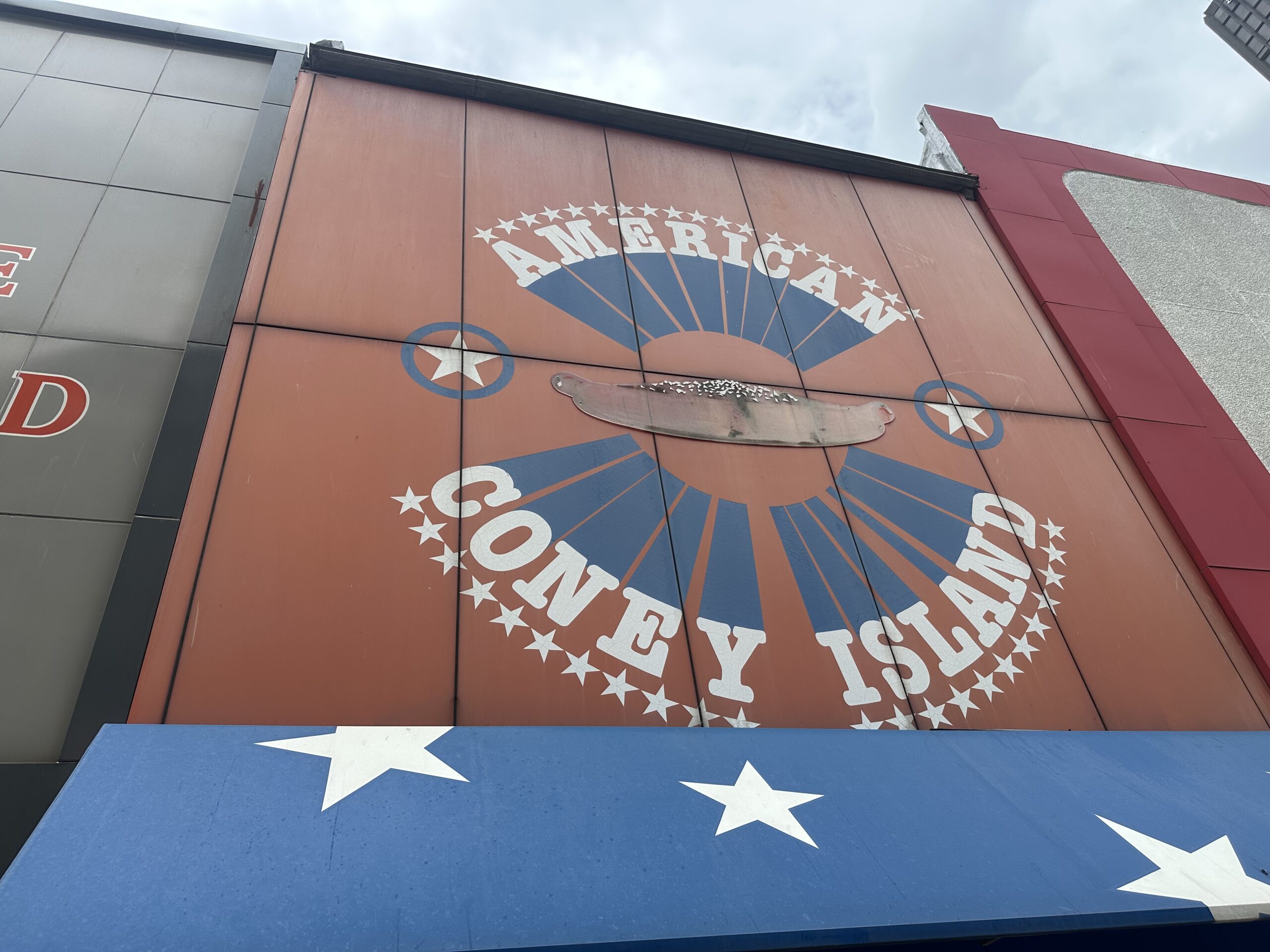
American Coney Island
Since1917, by its own countVisitingRestaurant or bar
Start where Detroit’s most famous lunch was invented, or one of the two places that says so. American Coney Island has been on West Lafayette since the Keros family opened it. The house story says Gust Keros started it in 1917; the authors of the book Coney Detroit, working from city directories, put the founding later, after Gust and his brother Bill had a falling-out and Bill kept Lafayette Coney Island next door.
Either way, the two have shared a wall and a rivalry for about ninety years, and the menu has barely moved. The classic order is a natural-casing hot dog in a steamed bun with beanless chili, a line of yellow mustard and chopped white onion. Add chili fries for the table.
American is the roomier of the two.
Stop 2
Two James Spirits
Since2013VisitingRestaurant or bar
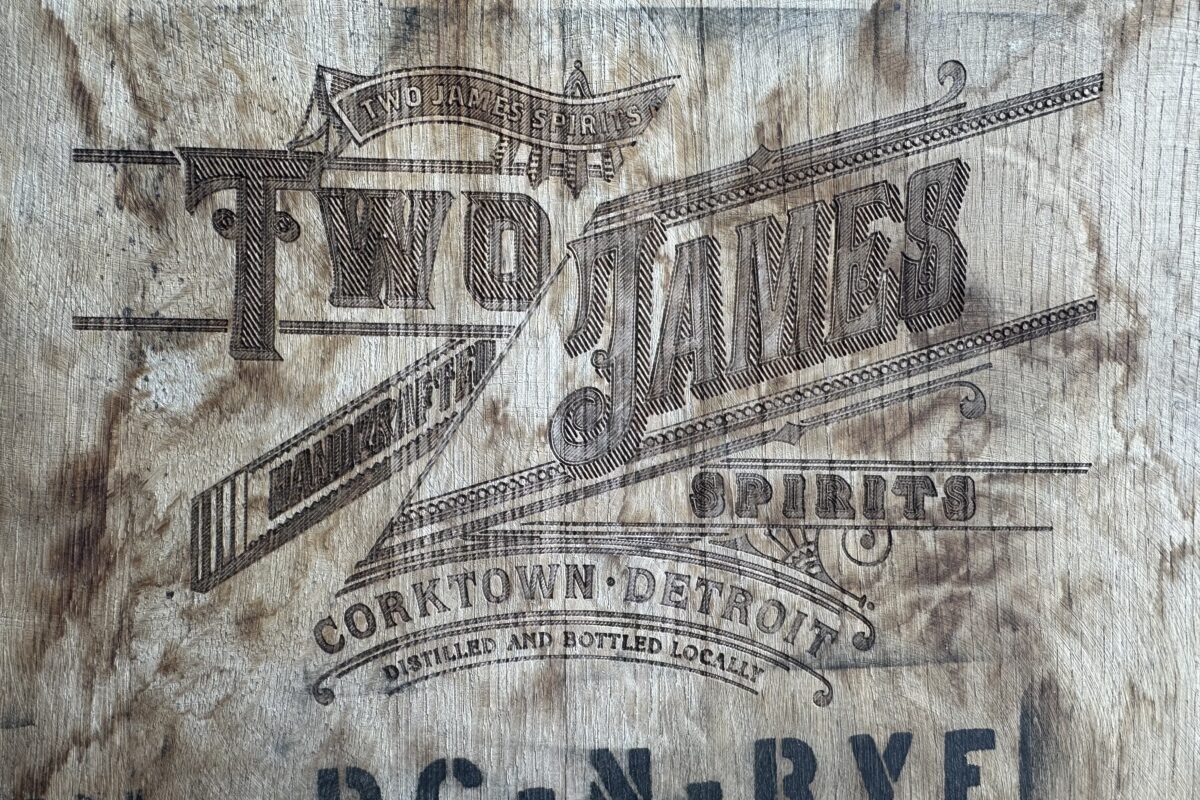
Head west on Michigan Avenue to Corktown. When Two James opened in 2013, it was the first licensed distillery in Detroit since before Prohibition. Partners Peter Bailey, David Landrum and Andrew Mohr named it for Bailey’s and Landrum’s fathers, who were both named James, and spent more than a year renovating the building at 2445 Michigan.
The early lineup leaned on Detroit history: 28 Island Vodka, named for the Detroit River islands bootleggers used during Prohibition; Old Cockney Gin; and Grass Widow, a revival of a whiskey made in Detroit before the dry years. Bourbons and other whiskeys followed as the barrels came of age.
The tasting room is built around a round concrete bar. It’s a cocktail bar more than a restaurant; when we went, the food was bags of Better Made, which ties in nicely with stop nine. Michigan Central Station is a few blocks west if you want to make an afternoon of it. Check hours before you go.
Stop 3
Shinola
Since2013VisitingOpen to visit
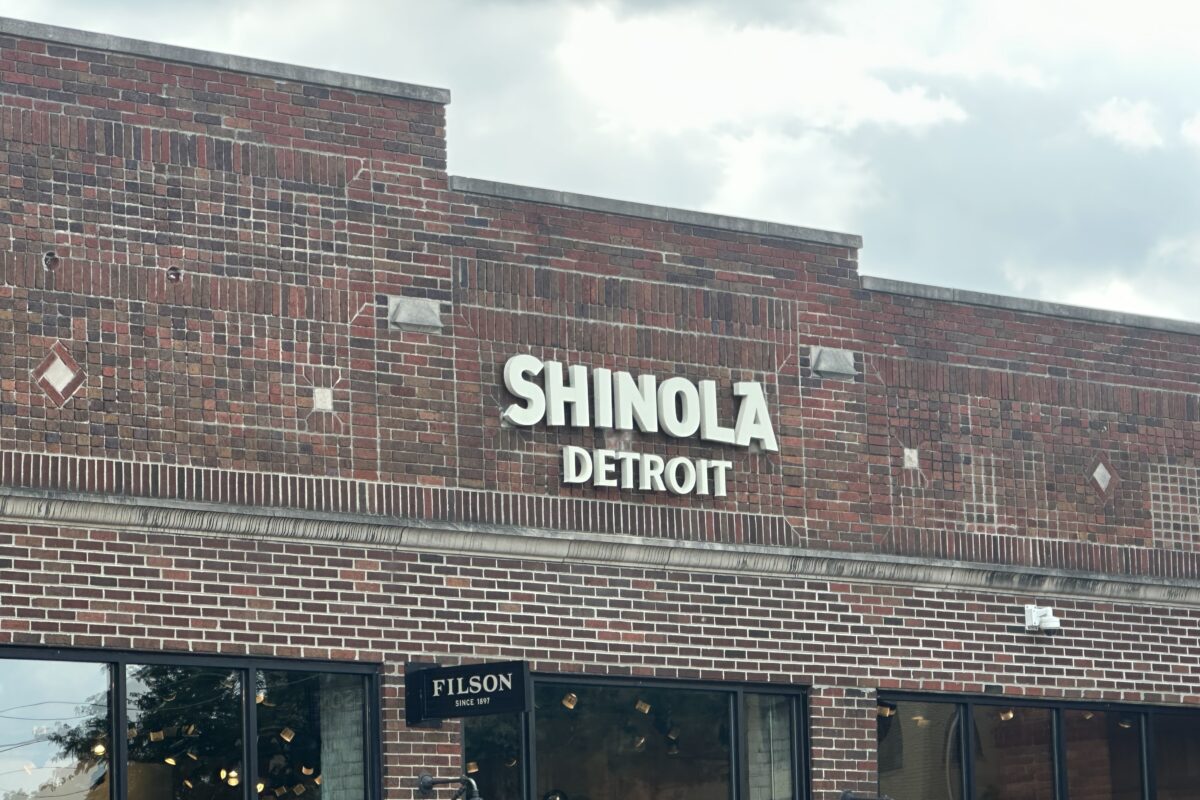
Shinola opened its flagship on West Canfield on June 28, 2013, in a former Willys-Overland building between Second and Cass. It was billed as the Shinola Store and Bicycle Assembly Headquarters back then; the bikes were discontinued in early 2025, but the watches, leather goods and the rest are still here.
The company was founded in 2011 by Tom Kartsotis, a co-founder of Fossil, and bought the name of a shoe polish brand that ran from 1877 to 1960. Yes, that Shinola. The watches are assembled across town in the Argonaut Building in New Center, once a General Motors research lab and now home to the College for Creative Studies. Plenty of the parts come from Europe and Asia; the assembly is what happens here.
Third Man Records shares the building. If you’re doing our Rock route too, that’s one parking spot for two stops.
Stop 4
Motor City Brewing Works
Since1994VisitingRestaurant or bar
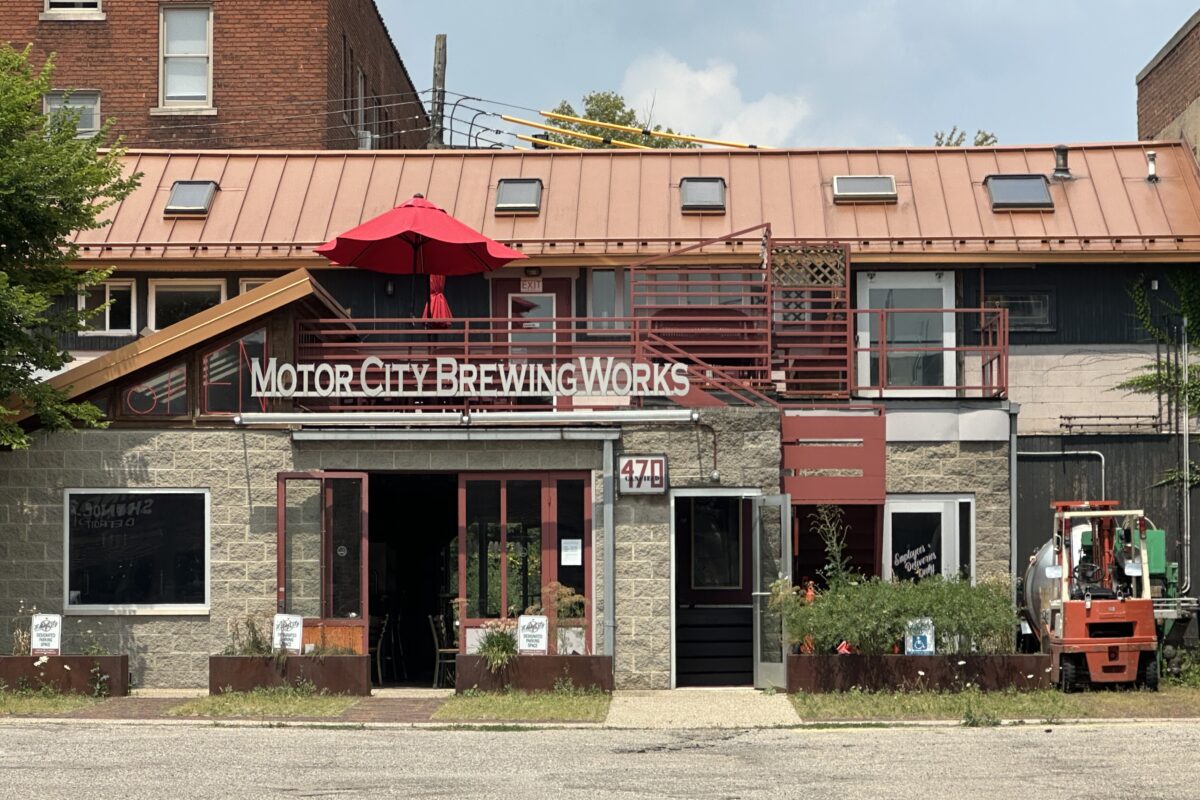
Cross Canfield. Motor City Brewing Works opened in 1994 and calls itself the city’s oldest operating microbrewery, with John Linardos as the owner and constant. It became a Cass Corridor fixture on house beers like Ghettoblaster, pizza and art on the walls, plus a run of Ghettoblaster CD compilations of local bands.
For more than thirty years its brew kettle ran on the city’s old district steam system. That section of line reached the end of its life and was shut off on December 31, 2025. The taproom closed after February 8, 2026, while the owners worked out what came next, and the beer kept reaching store shelves with help from other brewers. It came back in the summer on a weekend schedule, Friday through Sunday, with a limited kitchen.
We went years ago, before any of this. Call or check the website before you go, because the schedule has changed more than once this year.
Stop 5
Carhartt Flagship Store
Since1889VisitingOpen to visitOur visitNot yet
A short walk up Cass, Carhartt came home. Hamilton Carhartt started making work overalls in Detroit in 1889, and the company is still family owned and still based in Metro Detroit, in Dearborn. In September 2015 it opened this flagship at 5800 Cass, its first store in the city where it started.
The building is worth a look on its own. Architect Charles Agree designed it in 1928 as a Marmon car dealership, and it later spent more than forty years as Cass Motors, which is a fitting past for a store that sells clothes to people who fix things.
Inside it’s the full line, from the duck canvas chore coat to the beanie half the city wears from October to April. It sits on the edge of Wayne State’s campus, so expect students as well as tradespeople.
Stop 6
Ford Piquette Avenue Plant
Since1904VisitingTicketedOur visitNot yet
Head east to Milwaukee Junction. Ford built this three-story brick plant on Piquette Avenue in 1904, and on September 27, 1908, the first production Model T rolled out of it. The first 14,000 or so were assembled here before Ford moved most production to Highland Park by early 1910. Studebaker took over the building and made cars in it until 1933.
It’s now the Ford Piquette Avenue Plant museum, run by a nonprofit since 2001 and a National Historic Landmark since 2006. The building is largely unchanged from its early years, and the floors are filled with early cars, many of them made in Detroit. The third floor is where the Model T was developed and built.
It’s open Wednesday through Sunday, 10 a.m. to 4 p.m., with guided tours at 10, noon and 2. Adult admission is $25. A section of the facade came down in a storm in early September 2026; the museum kept its events on, but check before you go.
Stop 7
Germack Pistachio Company
Since1924VisitingOpen to visitOur visitNot yet
Eastern Market is next. Brothers John and Frank Germack, Armenian immigrants, started importing foods in New York and opened a wholesale business in Detroit in 1924. By the Detroit Historical Society’s account, they were the first in the United States to roast pistachios. In 1935 the company moved to Russell Street, on the edge of the market, and Germack has had a shop in Eastern Market ever since.
The roasting has moved elsewhere in the city, but the store on Russell is where to buy: pistachios by the bag, roasted in Detroit, and plenty of other nuts besides. One bag tends to turn into three.
Saturday is the big market day, when the sheds fill up and parking gets hard. Come early, or come on a weekday if you’d rather browse in peace. Murals from years of Murals in the Market cover the walls around you.
Stop 8
Faygo
Since1907VisitingSidewalk onlyOur visitNot yet
Head out Gratiot. Ben and Perry Feigenson, Russian immigrant bakers, started Feigenson Brothers Bottle Works in Detroit in November 1907, using their cake-frosting flavors to make soda. By 1921 the name was too long for the bottles, so it became Faygo. The company opened this bottling plant on Gratiot in 1935, and it’s still running.
The flavors tell the history. Rock & Rye dates to the 1920s and is named for a Prohibition-era drink. The original strawberry soda was renamed Redpop in the late 1960s. The family sold the company in 1986, and since 1987 it has belonged to National Beverage Corp., which kept it in the same building on the same road.
This is a working plant, with no tours and no shop, so look from Gratiot and keep moving. Pick up a two-liter at any party store on the way. It counts.
Stop 9
Better Made
Since1930VisitingOpen to visitOur visitNot yet
Two miles farther out Gratiot is the smell of frying potatoes. Sicilian immigrants Cross Moceri and Peter Cipriano bought a small chip operation on the east side in 1930, sold their chips outside movie theaters, and launched the Better Made name in 1934. In the 1930s Detroit had more than twenty chip makers. Better Made is the one that lasted.
The plant on Gratiot, between Harper and French Road, turns tens of millions of pounds of potatoes into chips each year, and the company uses Michigan potatoes about ten months out of twelve. It marked its 95th year in 2025, still on the same east side stretch.
There are no factory tours anymore, but there’s a store at the plant where you can buy chips, including flavors you don’t see in every grocery, plus shirts and hats. It has kept weekday and Saturday daytime hours. Check before you drive out.
Stop 10
Buddy’s Pizza (the Original)
Since1946VisitingRestaurant or barOur visitNot yet
Finish at Six Mile and Conant, where Detroit-style pizza started. Gus Guerra opened Buddy’s Rendezvous here as a neighborhood bar, and in 1946 he started serving a square pizza baked in blue steel pans, the kind made to hold small parts in the auto plants. The family recipe is credited to his wife, Anna. The pan gave the crust its crisp, fried edge, and the cheese went all the way to the sides so it caramelized against the steel.
Guerra sold the place in 1953 and went on to open the Cloverleaf in Eastpointe, which made its own square. The Jacobs family ran Buddy’s for decades and grew it into a chain, and it’s now owned by a group of local investors. This building, at 17125 Conant, is still the original.
Order a pepperoni square and fight for a corner piece. That’s the point of the pan.