
Haunted Detroit: Ghost Stories and the Record
Eight stops, five bars and a lot of stories: Detroit’s ghost lore, told as lore, next to what the record actually says.
- Stops 8
- Time An afternoon into the evening
- Cost Free guide
- Best by Car
The guide is free. Admission, food, drinks and parking along the way are on you.
This is a driving route from the riverfront to the city’s northeast edge. Five stops are bars or restaurants, so hours run the day: check before you go, and pick a driver. Fort Wayne and Elmwood keep gate hours, so do them in daylight, and save the Whitney for dinner. We’ve been to 2 of these 8 stops, the Masonic Temple and the Whitney. The others are marked, and we’d love your help with them.
The route in Google Maps, in parts
Stop 1
Tommy’s Detroit Bar & Grill
The storyA man in a white fedoraVisitingRestaurant or barOur visitNot yet
Start downtown on Third Street, a block off the river, in a two-story brick building with a long memory. In 2013 a Wayne State archaeology team dug into it and found evidence that the basement was a Prohibition speakeasy, remembered as Little Harry’s: two hidden entrances, a false room, and a tunnel, now caved in and bricked up, that likely served as an escape route during raids. Its Prohibition-era owner may have had ties to the Purple Gang.
Then come the stories. Tommy Burelle, who bought the bar in 2011, has said things fly off the shelves, and he describes a figure in a white fedora that he believes nearly locked him in the walk-in cooler, twice. Talk of bodies under the basement concrete is just that: talk.
You may also hear that the tunnel was an Underground Railroad route. We couldn’t find documentation for that, and the dig points to Prohibition. Call ahead for hours before you build a day around it.
Stop 2
Historic Fort Wayne
The storyLt. Philip Ostrander and a soldier in the tunnelVisitingOpen to visitOur visitNot yet
Head southwest on Jefferson to the star fort the Army built on the river in the 1840s. Soldiers trained here for the Civil War, a few died and were buried on the grounds before their remains were moved to a cemetery nearby, and the fort never fired its guns at an enemy.
The ground is older than the fort. There’s an Indigenous burial mound on the site, and in 2025 the city returned the mound’s parcel to the Nottawaseppi Huron Band of the Potawatomi. Treat it with respect.
The Historic Fort Wayne Coalition’s fall lantern tours tell of Lt. Philip Ostrander, one of the fort’s resident ghosts. Guides also tell of workers who ate lunch in a tunnel to the gun positions to escape the heat and ran out after a Civil War soldier in full uniform stepped from the stone wall and walked past them.
In season the grounds are open daily from 6 a.m. to 8 p.m., and the buildings only on guided tours, booked through the city (Fridays) or the volunteer coalition (Saturdays). Season dates shift, so call (313) 348-7721 before you drive out.
Stop 3
Nancy Whiskey
The storySinatra with the power offVisitingRestaurant or barOur visitNot yet
Back toward downtown, Nancy Whiskey sits on Harrison Street in North Corktown and bills itself as Detroit’s oldest party. It dates its story to 1902, when a family ran a general store here, and it came back from a fire in 2009. Legend says Jimmy Hoffa used the phone booth in the front corner.
Regulars will tell you about at least three friendly ghosts. In the 2000s a paranormal group cut the power and, by owner Gerald Stevens’ account, recorded voices and Frank Sinatra music with no source. Someone tapped one investigator on the shoulder in the basement, and he wouldn’t go back down.
Around 2013, a barmaid doing inventory in the locked basement heard footsteps overhead. She suspected Owen McCarthy, a former owner, and set out a glass of his favorite Dewar’s. The footsteps stopped.
Stevens says he believes the stories, though he hasn’t experienced anything himself. Order a Dewar’s anyway.
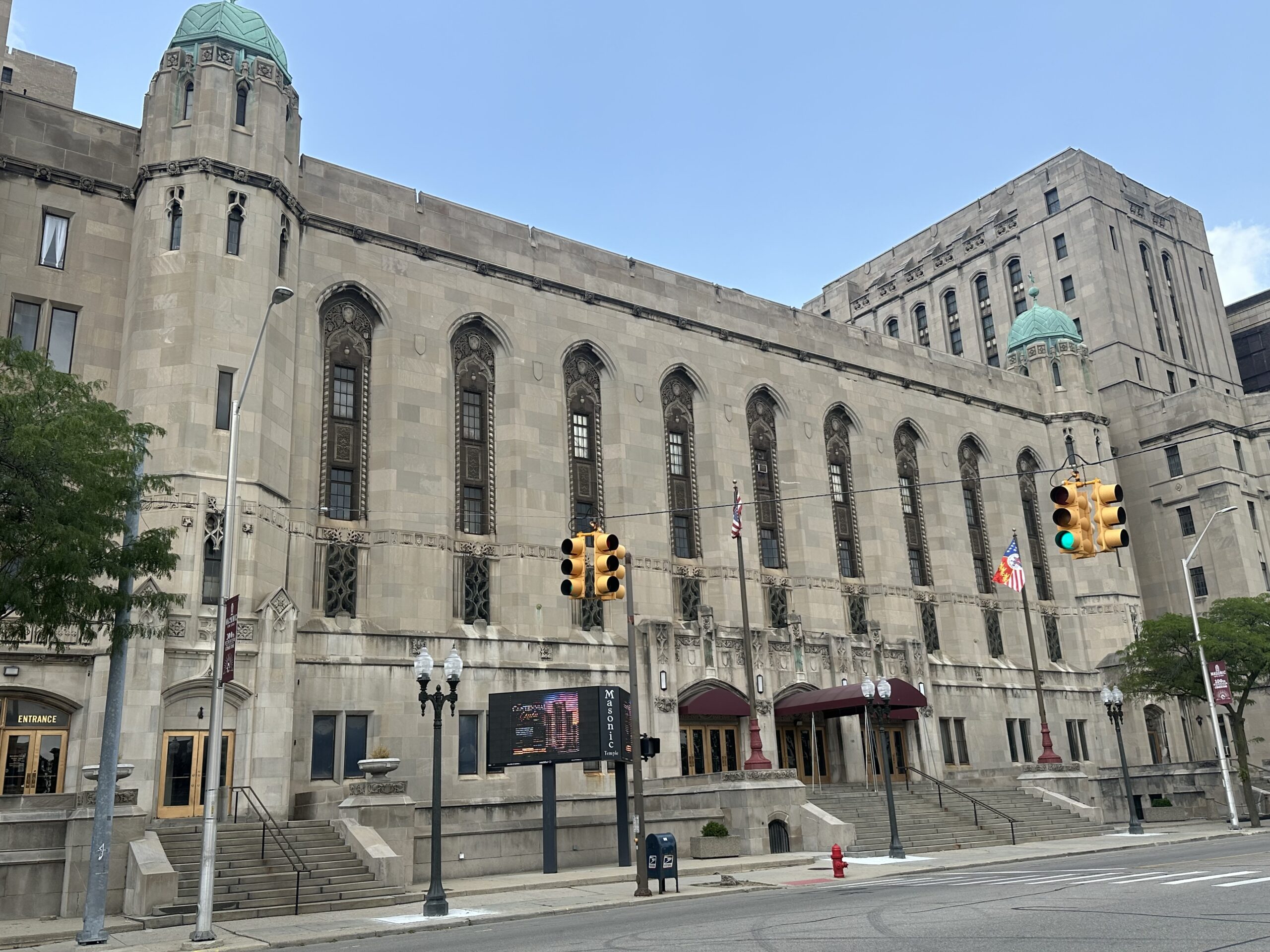
Stop 4
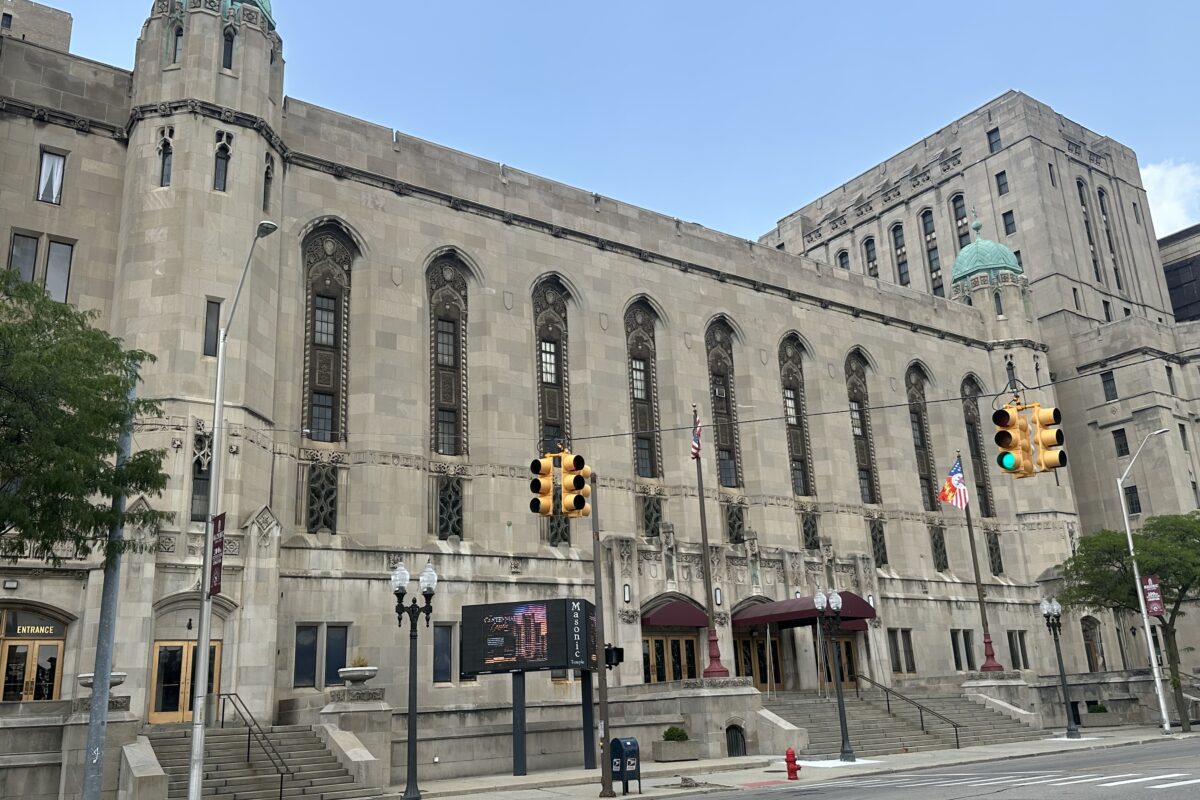
Detroit Masonic Temple
The storyThe architect who didn’t jumpVisitingTicketed
The best-known ghost story in Midtown is also the easiest to check. The legend goes that George D. Mason, the temple’s architect, overspent on the building, went bankrupt, lost his wife, and jumped from the top. Guards, docents and concertgoers say they’ve seen him climbing the stairs, closing windows and hiding things.
The record is less dramatic. Mason died in 1948, at 91, in his home at the Wilshire apartments on Grand Boulevard. The Detroit Historical Society says plainly that the suicide story isn’t true, and it comes back every Halloween anyway.
What is true is remarkable enough. The temple opened in 1926 and has 1,037 rooms, and it has been the largest Masonic building in the world since 1939. In 2013, facing foreclosure over back taxes, it got $142,000 from Jack White, and its Scottish Rite cathedral is now the Jack White Theater.
You can get in two ways: a ticket to a show, or one of the temple’s building tours, sold ahead on TicketWeb (not at the door). Either way, wander the halls and see if anyone closes a window.
Stop 5
Elmwood Cemetery
The storyBloody Run, July 31, 1763VisitingCemetery groundsOur visitNot yet
Drive east to Elmwood, dedicated in 1846 and Michigan’s oldest continuously operating nondenominational cemetery. Frederick Law Olmsted advised its trustees in 1890 to keep the land rolling and wooded, and they did.
The creek running through it carries the city’s bloodiest name. On July 31, 1763, during Pontiac’s siege of Detroit, warriors ambushed a British column under Capt. James Dalyell at Parent’s Creek. Dalyell and about 20 of his men were killed and dozens more wounded, and the creek became Bloody Run, said to have run red that night. Most of it now flows through city sewers. Elmwood is the only place in Detroit where you can still see it.
Visitors report orbs and flashes of light around the grounds. The history is unsettling enough on its own.
Coleman A. Young, Lewis Cass and the MC5’s Fred “Sonic” Smith are buried here. It’s an active cemetery: keep to the paths, keep it quiet, and call ahead for gate hours (313-567-3453).
Stop 6
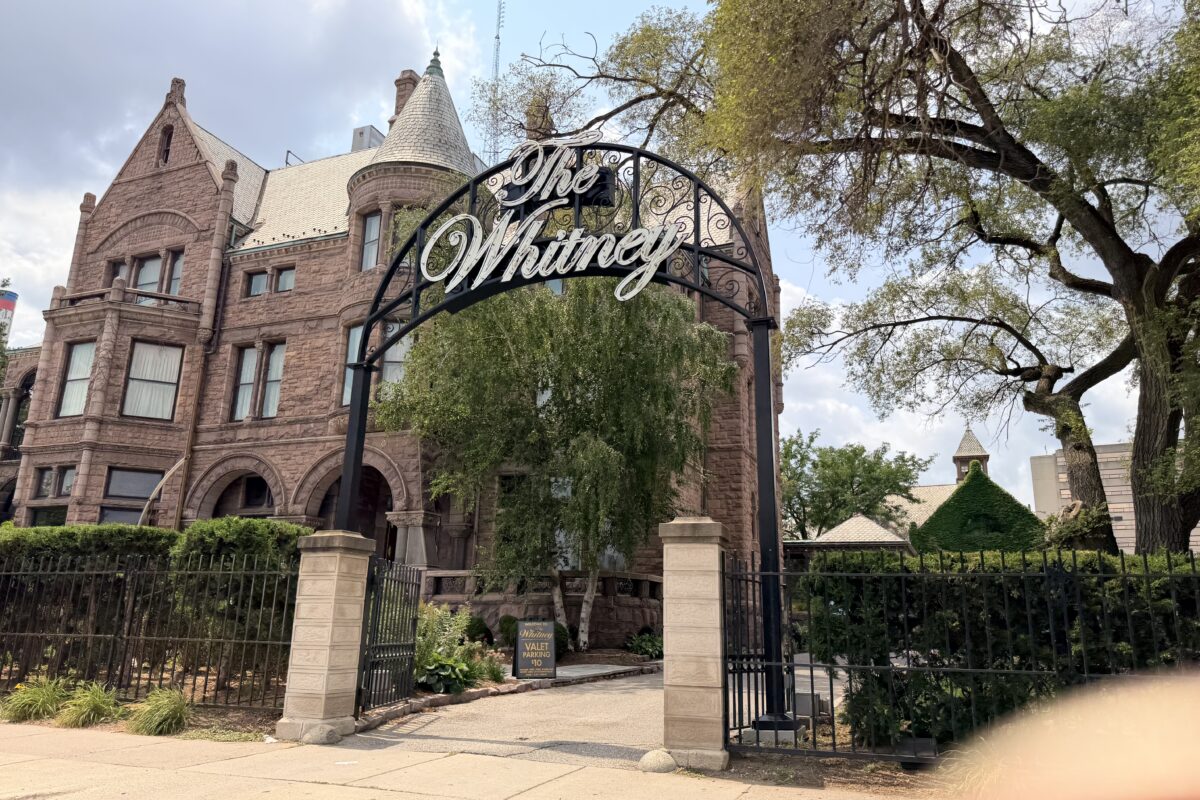
The Whitney
The storyFlora, a tea set and the GhostBarVisitingRestaurant or bar
Back west on Woodward at Canfield is the house most of Detroit’s ghost stories run through. Lumber baron David Whitney Jr. finished his mansion in 1894: Gordon W. Lloyd’s design in pink jasper, 52 rooms and 218 windows. Whitney died in the house in 1900, and his second wife, Sara, in 1917. Records confirm at least three deaths here, Sara’s brother among them. The Wayne County Medical Society moved in later, and it has been a restaurant since 1986.
The best-known story belongs to Flora, Whitney’s first wife and Sara’s sister. She died in 1882, before the house was built, and the story goes that she weeps in the third-floor women’s restroom over the home she never got. A tea set is kept in the carriage house for daughter Grace. Move it, staff say, and china breaks in the mansion.
The third-floor bar is called the GhostBar for a reason. Dye Paranormal, the house’s official investigators, run paranormal dinner tours; book well ahead in October.
Stop 7
Cadieux Cafe
The storyYvonne Devos in a blue dressVisitingRestaurant or barOur visitNot yet
Out on the far east side, on Cadieux Road, is the heart of what was Detroit’s Belgian community. Belgian immigrants opened the Cadieux Cafe in the early 1930s as a Prohibition speakeasy. Robert and Yvonne Devos bought it in 1962 and ran it for decades, and it’s one of the few places in the country to play feather bowling: rolling wooden discs down a curved lane toward a feather stuck in the far end. Anthony Bourdain came through for No Reservations in 2009, and in 2018 the Devos family sold to Paul Howard of Cliff Bell’s and musician John Rutherford.
The stories are about family. Yvonne is said to appear in a blue dress at a table near the entrance to the feather bowling room, and some say Robert turns up in the basement. A bartender once reported seeing a woman leave the ladies’ room after hours and vanish. Staff talk about doors closing on their own and things moving overnight.
Check hours before you go, and call if you want a lane.
Stop 8
Two Way Inn
The storyThe Cowboy and the Lady in WhiteVisitingRestaurant or barOur visitNot yet
Finish at the city’s northeast edge, on Mt. Elliott, at a bar that claims to be Detroit’s oldest. Col. Philetus Norris, a Civil War veteran who later became the second superintendent of Yellowstone, opened the Two Way Inn here in 1876, and it has operated in the same building since. It was a stagecoach stop about a day’s ride from downtown, a general store, a hotel and a dance hall, and a basement cell held rowdy patrons in the late 1800s.
Norris died in 1885, and the story goes that he never left. Staff and regulars describe a figure in a wide-brimmed hat they call the Cowboy, and a Lady in White said to be one of Norris’s daughters. The family who live in the attached house prefer to call the place spirited, not haunted.
It has been open Tuesday through Saturday. Ring the bell, wait to be buzzed in, and raise a glass to the Colonel.